zenpundit.com » islam.insurgency

Archive for the ‘islam.insurgency’ Category

Lieven on Pakistan

Wednesday, June 15th, 2011

Noted foreign policy commentator and academic Anatol Lieven has a new book on Pakistan, and holds forth at length here on the always excellent Conversations With History.

For my part, diplomatic relations with Pakistan amount to our stage managing their elite’s LIC war against us, Afghanistan and India at what our elite perceive as a tolerable level of affront , deceit and violence. And we are doing it as expensively as possible.

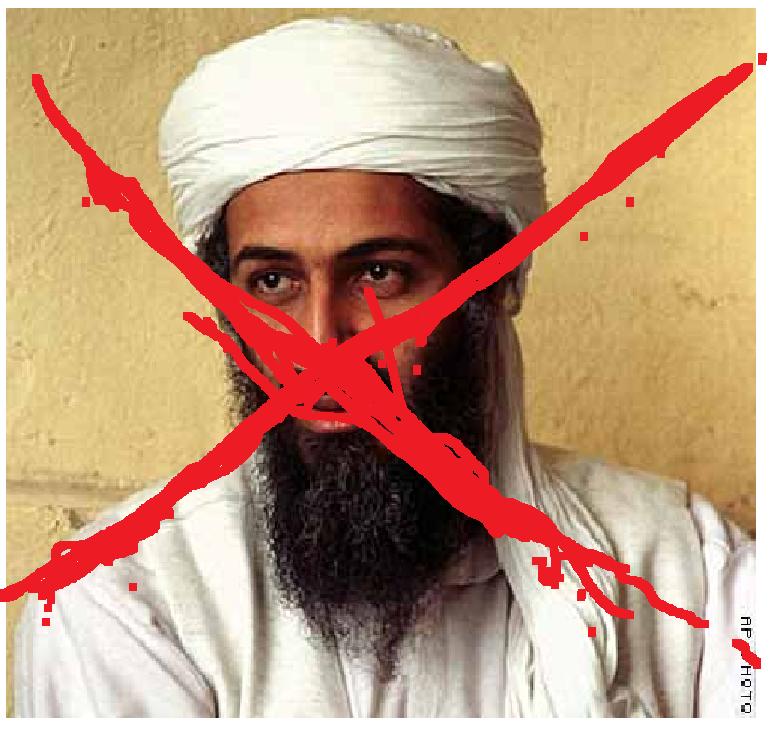
BIN LADEN DEAD

Monday, May 2nd, 2011

binladendead2.jpg

May he rot in Hell. 

Osama Bin Laden, sponsor of 9-11 and founder of al Qaida is dead, killed in Pakistan by a US JSOC-CIA team, possibly with Pakistani cooperation (or…maybe not).

Details will emerge that Bin Laden has not been in a cave for the past decade.

A great day for the United States! The Obama administration deserves credit here and the military and intelligence personnel deserve our deepest thanks!

On Libya

Friday, April 1st, 2011

I thought it might be interesting to look at some views of the Libyan War and then offer some remarks of my own. Of course, readers are encouraged to read each source in full rather than just my excerpt: First up….

CNAS (Andrew Exum & Zachary Hosford)Forging a Libya Strategy: Policy Recommendations for the Obama Administration

….The most dangerous outcome for the United States is also the most likely, which is a stalemate that prolongs U.S. and allied military intervention in Libya. The relative lack of sophistication and organization among rebel fighting forces means they may be unable to regain the momentum in Libya and defeat Gadhafi’s forces in open combat absent significant direct and indirect support from U.S.and allied militaries – which is not explicitly authorized by UNSCR 1973 and might not be supported by the U.S. Congress.

A stalemate in Libya would effectively result in a de facto partition of the country with a severely underundergoverned and disorganized safe haven in eastern Libya for the rebels that could provide refuge for various militant and criminal groups capable of exporting violence and instability to other countries in North Africa and the Middle East. Such a scenario would prolong U.S. and allied military intervention as only a major Western investment in developing the independent governance, economic and security force capacity of eastern Libya would be likely to forestall this outcome. However, such an investment is highly unlikely due to the overarching fiscal constraints facing the United States and NATO countries and competing priorities.

Nice work on a very important policy brief by Exum and Hosford. This one was “tight”, written to the point, properly focused on strategic variables rather than getting bogged down in debatable specialist minutia and delivering clear policy option scenarios. Written in exactly the right mode for a White House/NSC staffer or deputy to SEC to digest and disseminate to their boss or peers. Kudos, gents.

I think Ex and Hosford have correctly diagnosed Libya as a potential albatross for the US from which we stand to gain very little benefit even in the best case scenario. I disagree with their assertion that it would be a tolerable outcome to leave Gaddafi in power. No, that ship has already sailed and we have had enough Lockerbies. To imagine that there will not be ongoing blowback from a rump Gaddafi regime in a fragile neighborhood with which the US will repeatedly have to deal is just not at all realistic.

The Allies badly wanted Gaddafi out. They will have to be pressured now to follow through and the US needs to make it clear that we will neither babysit an enraged, cornered, Gaddafi for the next seven years, tying down an aircraft carrier group and costing the US taxpayer billions, nor we will accept the Brits and French hanging Gaddafi’s triumphant survival on our doorstep as an “American defeat” while skating away diplomatically (which is their Plan B if we refuse to do a Panama type operation for them). They will have to finish the job on the ground themselves and ensure Gaddafi’s death or departure with our support, but not the reverse. Or Paris and London can help build a real rebel army, salted liberally with PMC units and SOF “advisers” to stiffen spines.

CRS Report ( Christopher M. Blanchard) – Libya Unrest and US Policy

….The complexity of these factors and the stress that ongoing fighting places on their interrelationships creates challenges both for Qadhafi supporters and opposition groups. As both parties seek to navigate the political waters of the upheaval and look ahead to potential postconflictscenarios, they face difficult questions about current tactical choices and future means for promoting national reconciliation and governing effectively.

For the opposition, the question of foreign military intervention is complicated by opposition leaders’ desire for external assistance and their appreciation for the strong nationalist, anticolonial sentiment shared by most Libyans. Internally, political differences and competing demands among the opposition’s constituent groups may complicate the maintenance of a united front against Qadhafi counterattacks and complicate efforts to speak with one voice in dealings with the international community. Other regional examples suggest that such internal differences may prove even more challenging for any transitional authority in the aftermath of the conflict…

In a sea of government waste and middling competence, the Congressional Research Service stands out as a gem, giving the taxpayers a tremendous informational “bang for the buck” in reports prepared by experts on a vast array of subjects. While not an advocacy piece, the report is a valuable “backgrounder” on the Libyan War of a kind that you cannot get from the MSM.

Marc Lynch – Why Obama had to act in Libya

….And my conversations with Arab activists and intellectuals, and my monitoring of Arab media and internet traffic, have convinced me that the intervention was both important and desirable.  The administration understood, better than their critics, that Libya had become a litmus test for American credibility and intentions, with an Arab public riveted to al-Jazeera.  From what I can see, many people broadly sympathetic to Arab interests and concerns are out of step with Arab opinion this time.    In the Arab public sphere, this is not another Iraq — though, as I’ve warned repeatedly, it could become one if American troops get involved on the ground and there is an extended, bloody quagmire.  This administration is all too aware of the dangers of mission creep, escalation, and the ticking clock on Arab and international support which so many of us have warned against.  They don’t want another Iraq, as Obama made clear…. even if it is not obvious that they can avoid one. 

Lynch is an Arabist, and while the internet traffic aspect is skewing the demographic, al-Jazeera coverage is a dominant information effect in Arab public with limited literacy. It is sort of the Walter Cronkite effect from the 60’s in play again, if the primary trusted source is broadcasting an interpretation, it takes on the air of truth for a majority of viewers. That said, it matters very little whether al-Jazeera is giving kudos to the US if the average rebel can’t fire an RPG, quickly unjam and reload his AK-47 under fire, get water or food in the field or dig simple trench and sandbag defenses. Guys milling about nervously out in the open road, brandishing weapons and arguing amongst themselves will get their clocks cleaned by any opponent with even marginal military training and leadership. Gaddafi’s military forces are fourth rate – this is not Saddam’s army of 2003, much less of 1991 – but they can handle untrained and leaderless groups easily enough.

Which brings us to…..

Thomas P.M. BarnettArming the Libyan rebels

…There’s also al-Qaeda in the Islamic Maghreb (AQIM), but that group has frankly struggled to be taken seriously as a force, as it’s mostly a relabeling of an existing group that was going nowhere (bigger the territory in the title, more likely, in my mind, that it’s not exactly succeeding anywhere). Up to now, no one has portrayed that group as Libyan-centric.  Yes, they will show up, but that’s standard.  The reality, as noted in the piece, is that you have to train on what you provide, so we’ll have people on the ground (besides the CIA already there).  If things go really sour, then we burn that bridge when we come to it.  But this is not a logical showstopper.  A Libyan long divided in two and suffering civil conflict will do the same – or far better – for AQIM than a concerted arms push to dethrone the guy.  So, again, factor them in as the cost of doing any sort of business here, but do not elevate them into the decision-tilting bogeyman, because they’re not, and speculating in the press doesn’t make them so.

Going the Reagan Doctrine route was my original preference on Libya and I am still in favor of sponsoring an insurgency war against Gaddafi, with a couple of caveats.

First, SECDEF Robert Gates’ strong aversion to doing this gives me some pause, given his background as a former head of the IC and his access as SECDEF to our best current intelligence (which, admittedly, may not be that much). His judgment should be given considerable weight. Secondly, where are the Arabs? A hundred or so experienced NCO’s and junior officers from Egypt and KSA would be of immense help in establishing unit discipline and basic training for the rebels. The Saudis very well might be contributing substantial amounts of cash but that’s no longer good enough. The Arab League needs to show it’s alleged support for helping the rebels and removing Gaddafi with boots and not just empty words.

Reflexively, American policy makers face a great temptation to “own” the crisis and micromanage the Libyan War against some impossibly unrealistic standard of success. Let’s resist it. We should help drive nails in Gaddafi’s coffin but we don’t need to be the main hammer. Sometimes less is more and the Libyan rebels getting rid of their tyrant badly is better than us doing it for them well.
Corn’s Caliphates in Wonderland

Saturday, March 26th, 2011


They Just Don’t Make Caliphates Like They Used To….

SWJ Blog featured a lengthy (30 page) essay by Dr. Tony Corn on….well….many things. Corn begins with caliphates and then sort of takes off much like a blown up balloon abruptly released by a child prior to tying a knot in the end.

The Clash of the Caliphates: Understanding the Real War of Ideas by Dr. Tony Corn

….For one thing, within the global umma, there appears to be as many conceptions of the ideal Caliphate as there are Muslims. This grass-roots longing for a symbol of unity should be heard with the proverbial Freudian -third ear,?? and seen for what it really is, i.e., a symptom rather than a disease. For another, by agreeing to establish diplomatic relations with the 57-member Organization of the Islamic Conference (OIC), America and Europe have, in essence, already granted the OIC the status of a Quasi-Caliphate.

More important still, it is time for Western policy-makers to realize that the ideological rivalry between Saudi Arabia and Iran that has been going on since 1979 constitutes nothing less than a Clash of the Caliphates. Through a soft power strategy blurring the distinction between -public diplomacy?? and -political warfare,?? -humanitarian aid?? and -religious propaganda,?? the two states have been the main drivers of the re-Islamization process throughout the Muslim world. The one-upmanship dynamic generated by the rivalry between these two fundamentalist regimes is the main reason why, from the Balkans to Pakistan, the re-Islamization of the global umma has taken a radical, rather than moderate, dimension.

Ok, “caliphates” as a metaphor/analogy for geopolitical rivalry of Muslim states works but it is not really what Islamists or normal Muslims would mean by the term. It is a very odd usage. I’m not overly bothered by that because I tend to like analogies but Corn’s device here is apt to make the heads of area studies and Islamic history scholars explode. The whole essay is in this meandering, idiosyncratic, vein.

Now that is not to suggest that you should not read the piece. Dr. Corn held my attention all the way through and he has a number of excellent observations on many, loosely related, subjects. For example, after discussing the pernicious effects of Saudi donations and Edward Said’s agitprop theory of “Orientalism” on the intellectual objectivity of academia, Corn writes:

…The combined effect of the House of Saud and the House of Said is the first reason why the Ivory Tower has done such a poor job identifying the nature of Muslim Exceptionalism. A more indirect, yet more insidious, reason is that, unlike in the early days of the Cold War, American academics across the board today are trained in social sciences rather than educated in the humanities. For social scientists, Explanation (erklaren) and -theory-building?? take precedence over Understanding (verstehen) and -policy-making. The victory of the -numerates over the -literates in the 1970s has produced a generation of scholars who show a certain virtuosity when it comes to -research design, but display an amazing lack, not just of historical literacy, but of -historical empathy as well. Not to make too fine a point: the Long War is being waged by a generation of policy-makers who, however articulate, never learned anything about history in their college years

Corn is spot on here. Not only is it spot on, it is likely to get much worse. After a brief qualitative “bump” from Iraq-Afghan war  language trained vets, diplos, analysts and spooks peters out, we will have the Gen Y kids with K-12 educations scrubbed free of history, foreign languages and science graduating from college with communication and marketing degrees and entering government service. Hang on to your hat when that happens.

What Corn really requires to vault his essays to the next level are the services of an experienced editor because less would be more. The man is erudite and insightful. He writes forcefully and raises a number of points that are important and with which I agree. Corn, commendably, also makes more of an effort to connect the dots than most. But maybe, if you have an essay that references David Kilcullen, Trotsky, neo-Ottomanism, lawfare, Sam Huntington, neo-COIN, Nasser, Vatican II, the Comintern, the Hapsburgs, Ataturk, public diplomacy, al- Qaradawi, social media, Fascism, Marc Lynch, Youtube, network theory, the UN, hybrid wars and the Protestant Reformation, it might be time to up the Ritalin dosage a notch. Jesus, there’s either a book proposal or four different articles in that kitchen sink of an op-ed!

Read it and take what is useful.

Guest Post: DARPA, STORyNet and the Fate of the War by J. Scott Shipman

Wednesday, March 2nd, 2011

J. Scott Shipman, the owner of a boutique consulting firm in the Metro DC area that is putting Col. John Boyd’s ideas into action, is a longtime friend of this blog and an occasional guest-poster. Scott has an important report regarding the “war of ideas” against the Islamist-Takfirist enemy in Afghanistan after attending a workshop hosted by DARPA.

DARPA, STORyNet and the Fate of the War

by J. Scott Shipman

 I had the opportunity to attend a DARPA workshop yesterday called STORyNet. The purpose was to survey narrative theories, to better understand the role of narrative in security contexts, and to survey the state of the art in narrative analysis and decomposition tools (see below): 

This STORyNET workshop has three goals:

1. To survey narrative theories.

These empirically informed theories should tell us something about the nature of stories: what is a story? What are its moving parts? Is there a list of necessary and sufficient conditions it takes for a stimulus to be considered a story instead of something else? Does the structure and function of stories vary considerably across cultural contexts or is there a universal theory of story?

2. To better understand the role of narrative in security contexts.

What role do stories play in influencing political violence and to what extent? What function do narratives serve in the process of political radicalization and how do theyinfluence a person or group’s choice of means (such as violence) to achieve political ends? How do stories influence bystanders’ response to conflict? Is it possible to measure how attitudes salient to security issues are shaped by stories?

3. To survey the state of the art in narrative analysis and decomposition tools.

How can we take stories and make them quantitatively analyzable in a rigorous, transparent and repeatable fashion? What analytic approaches or tools best establish a framework for the scientific study of the psychological and neurobiological impact of stories on people? Are particular approaches or tools better than others for understanding how stories propagate in a system so as to influence behavior?

I was alerted to the meeting by a member at one of my “groups” at LinkedIn and just barely made the registration cut-off. It was a good meeting, but not reassuring on our situation in Afghanistan—you’ll see why  below.

As a “hobby” I’ve been tinkering with the implications of patterns with respect to language and communications. Just about every presumption I have articulated over the last several months is being pursued in one way or another—which is good news for our guys. While the on-going research is good, I do believe there is room for better and more imaginative thinking, although I didn’t say anything during the meeting for once, I kept my mouth shut and just listened.

This is exceptionally brief and decidedly non-techincal.  Here are some observations of interest:

  • In Afghanistan, stories (those who tell them and those who believe) are central to our geopolitical strategy and policies.
  • There is underway, a “battle of the narratives,” where any “counter” narrative developed by the US must have credibility. This seems obvious, but the speaker observed the “story telling” was more important than the story. Given the high illiteracy rate, this makes sense.
  • We [DARPA] are reviewing chants (which are wildly popular), video, magazines, poetry, the Internet, and sermons as thematic vehicles for analysis.
  • The language of the Taliban is not secular, and not the language of the insurgency—for the Taliban everything hangs on the legacy of jihad and religious struggle.
  • The Taliban not willing to negotiate on matters of jihad. They are using a unified vision of Islam giving their struggle a noble foundation against the corruption of outsiders who want to “Christianize” the nation.
  • The Taliban uses symbology to portray the struggle as a cosmic conflict against Christian invaders and US puppets (those cooperating with the US). Framing this symbology to communicate clearly the frame of the righteous vs. the infidels.
  • The Taliban manipulates the language to connect the current struggle to previous struggles of “warrior poets.” There is hope a “discourse” can be created that will counter this framing [personal note: I’m not optimistic]. The Taliban uses different language to subjugate rural and urban dwellers, and actually have standard operating procedures for dealing with villages that resist.
  • The cognitive patterns of rural Afghanistan are “foreign” to most Westerners and they use alien methods of knowledge transfer (chants, often under the influence of hashish).
  • We are adding a geospatial element to our analysis of local and personal narratives (which includes subject, verb, object) with respect to identified “master narratives.”
  • Internet data is indexed, with an eye toward predictive analysis and situational awareness (and interestingly, “sentiment” analysis). We are finding predictive power from the topology of “networks”  used in models.
  • From a neuroscience perspective, there was an amazing talk on empathy. It turns out, based on fMRI testing that empathy is quite predictable across subjects. Research indicates people “care more” about an “in-group” to which they belong more than an “out group.” The speaker defined the brain as a “parliament” of competing parties and nuanced spectrums [personal note: this elegant description tracks with everything I’ve read on the topic.]. 
  • One presenter observed that after 10 years of war, we’re finally “getting” the importance of Pashtun culture and language. This presenter also noted US is still in need of people with language skills sufficient to adequately support the effort.

– End

COMMENTARY:

Zen here:

First, I’d  like to cordially thank Scott for letting me share his insights gleaned from the workshop here with ZP readers. This is one of those fascinating events largely unavailable to those folks residing outside a reasonable driving distance from the Beltway.

Secondly, I am heartened that the brilliant folks at DARPA are taking the theological-ideological discourse of the enemy seriously in analyzing the power of narrative. Charles Cameron makes that point here with regularity. Michael Scheuer, Gilles Kepel and Olivier Roy did so even before 9/11. Our political appointees and policy makers remain steadfastly allergic to this reality, unable to process or discuss in public with coherence how religious ideas are a root for political extremism. Col. David Kilcullen, who certainly understands political Islam better than most and whose creative and analytical acheivements in structuring a framework for countering insurgency are second  to none, eschews dealing with the topic in his theoretical writings on COIN where it can be avoided. That is the cost imposed by the political correctness to which our ruling elite are psychologically welded.

 It comes as no surprise to me that only after “10 years of war” are we finally “getting the importance of Pashtun culture”. 

Maybe at the dawn of the 22nd century we will be “old hands”.


Switch to our mobile site
