zenpundit.com » innovation

Archive for the ‘innovation’ Category

Some Anglospheric Multimedia

Thursday, May 27th, 2010

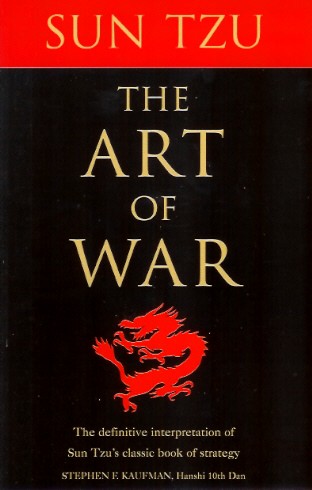
The Art of War by Sun Tzu

A BBC podcast on Sun Tzu’s classic The Art of War. Perhaps the most sublime work on strategy of all time ( Hat tip to The Warlord)

Next, and unrelated: 

Via blogfriend Robert Paterson, a new talk by educational and creativity thought leader, Sir Ken Robinson. The ritual TED bowing to Al Gore notwithstanding, if you are interested in education issues, this is a must see video.

Missile Defense Defense

Thursday, May 20th, 2010

I begin by stating I do not have the technical competence required to make an independent assessment here.

Recently, the NYT published an article quoting leading missile defense critic,  MIT Professor Ted Postol:

Review Cites Flaws in U.S. Antimissile Program

Mr. Obama’s announcement of his new antimissile plan in September was based on the Pentagon’s assessment that the SM-3, or Standard Missile 3, had intercepted 84 percent of incoming targets in tests. But a re-examination of results from 10 of those apparently successful tests by Theodore A. Postol and George N. Lewis, being published this month, finds only one or two successful intercepts – for a success rate of 10 to 20 percent.

Most of the approaching warheads, they say, would have been knocked off course but not destroyed. While that might work against a conventionally armed missile, it suggests that a nuclear warhead might still detonate. At issue is whether the SM-3 needs to strike and destroy the warhead of a missile – as the Pentagon says on its Web site.

“The system is highly fragile and brittle and will intercept warheads only by accident, if ever,” said Dr. Postol, a former Pentagon science adviser who forcefully criticized the performance of the Patriot antimissile system in the 1991 Persian Gulf war.

Naturally, the Pentagon disagreed with Dr. Postol, but their response was unusually blistering this time (and ignored by the Times):

Missile Defense Agency Responds to New York Times Article

….This sea-based interceptor missile is designed to intercept and destroy short to medium-range ballistic missiles using “hit to kill” technology, which means that the interceptor collides directly with the target missile or warhead, and destroys the target using only the force of the collision.  The allegation that target intercepts were reported as successful when they were not successful is wrong, and the data presented by the authors in the article is flawed, inaccurate and misleading.

In each successful intercept test the target missile was destroyed by the Aegis BMD/SM-3 system due to the extreme kinetic energy resulting from the “hit to kill” intercept.  In each instance, the mission objective of “hit to kill” of the unitary or separating target was achieved. 

Postol and Lewis apparently based their assessment on publicly released photos gleaned from a sensor mounted aboard the SM-3 and postulated what they perceived to be the interceptor’s impact point although they had no access to classified telemetry data showing the complete destruction of the target missiles, or subsequent sensor views of the intercept that were not publicly released so as not to reveal to potential adversaries exactly where the target missile was struck.

Actually, the publicly released videos, which can be seen at www.mda.mil/news/gallery_aegis.html, and from which the still photos were extracted, show infrared images from both interceptor and airborne sensors demonstrating the complete destruction of the target missiles.

All of the tests cited by the authors as “misses” were tests involving short-range unitary targets, when the warhead remains attached to the booster rocket.  These tests were correctly described by the Missile Defense Agency as successful intercepts, because they successfully intercepted the target.  Post-test analysis from collected telemetry showed that the interceptor’s kill vehicle impacted the target body or warhead within inches of the expected impact point that was calculated to maximize damage against a variety of warhead types.

….The authors of the SM-3 study cited only tests involving unitary targets, and chose not to cite the five successful intercepts in six attempts against separating targets, which, because of their increased speed and small size, pose a much more challenging target for the SM-3 than a much larger unitary target missile. They also did not mention the fact the system is successfully intercepting targets much smaller than probable threat missiles on a routine basis, and have attained test scores that many other Defense Department programs aspire to attain.

I mention all this because my amigo Shane Deichman, who like Postol, is a physicist and a former scientific adviser for the DoD (Postol for the Chief of Naval Operations, Deichman for JFCOM) and is currently working at the National Missile Defense Agency, felt that the rebuttal scored a direct hit on Postol’s claims about the system tests ( which might explain why it did not get cited by the NYT, though in fairness, the Times did quote the agency spokesman). I trust Shane’s judgment but I’m not able to expound on it, so he is cordially invited to add any comments here that he might wish that might further the reader’s (and my own) understanding.

Comments are, of course, open to all.
Nagl – Radical Reform for Teaching Strategy?

Thursday, April 29th, 2010

From the Strategy Conference…..

Thinking With a Fresh Mind

Wednesday, April 21st, 2010

A brief anecdote.

Today, a student came to me with a question that their science instructor could not answer (the curriculum is mostly intro to chem with some classical physics). I am in no way, shape or form, a scientist or even a teacher of science, but the students know I’m interested in many odd things and like to reason through intriguing problems with them. The student asked:

“How can a photon – which has 0 mass – have 0 kinetic energy even though it is moving? If it does have mass, how can a photon go the speed of light?”

Now, I knew that the answer had to be explained via quantum mechanics and was fuzzily certain it was because particles did not behave as particles should in this scenario, but the ability to give a coherent and scientifically accurate explanation that related to the student’s current knowledge base was beyond me. I do not have a good enough grasp of the basics of quantum physics to lead the student to particles and waves through a series of questions. So, after complimenting him on his insightful question, I said I would contact an expert, Dr. Von, and get him a concise, equation-free, answer, which Von helpfully provided.

The point here, however, is not the answer (Newtonian physics is invalid at this scale and momentum is redefined in relativity theory which leads to particle-wave duality, uncertainty and other aspects of quantum mechanics) but the excellence of the student’s thinking that went into the question.

The student knew very little about physics except what was presented in the course – essentially, some laws of Newtonian physics, basic constituent parts of matter, simple atomic models etc. Given that information and having – this part is critical – no prior assumptions, having understood the “rules”, in a few minutes he identified a contradiction or paradox that undermined the authority of an elegantly constructed system of great explanatory power, conceived by the greatest genius to ever walk the Earth.

Not too shabby for a younger American teen-ager. Remember him the next time some loudmouthed fool opines how worthless kids are today or how they learn nothing at school.

Obviously, my student is quite bright, but his reasoning was also not polluted with the preconceptions we all pick up as we gain ever greater depth of mastery of a field. It was fundamentally new to him, so he did not yet have the kind of blind confidence in “the rules that everyone knows to be true” possessed by most adults and nearly all experts. He was still skeptical. Few content domain experts are innovaters for this reason. They are mostly overconfident masters with answers – not makers who create or discover the novel by asking questions. They are not skeptics, they are guardians of received knowledge.

We all need to step back, periodically, from the rush of life and our own pride and try to look at the things we think we know with a fresh mind.

Metaphors and Analogies: A Two-Edged Sword

Thursday, April 15th, 2010

Frequent commenter T. Greer had an outstanding post on historical analogies and cognition at Scholar’s Stage:

Musing – ‘Cognitive Consequences of Historical Metaphors’

You can summarize the history of the Second World War in two paragraphs. Squeezing the causes, campaigns, and countries of the war into these paragraphs would be a gross simplification, but it is possible. This does not hold true for the Thirty Years War. It is one conflict that simply cannot be related in a paragraph. The number of actors involved, the myriad of motivations and goals of each, and the shifting alliances and intrigues between them all are simply too complex to be stripped down to a single page.* Piecing together the events of the Thirty Years War inevitably takes up much more time and effort than single page summaries allow.

….The implications of this are worth contemplation.

The great majority of policy makers are familiar with the Second World War. If asked to, I am sure that most folks in Washington concerned with foreign affairs and security policy could provide an accurate sketch of the countries and campaigns involved. Indeed, we conceptualize current challenges from the standpoint of World War II; allusions to it are the lifeblood of both popular and academic discourse on foreign affairs. Pearl Harbor, Munich, Stalingrad, Normandy, Yalta, and Hiroshima are gifts that keep on giving – they serve as an able metaphorical foundation for any point a pundit or analyst wishes to make.

Most of these metaphors are misguided

Agreed. Read the rest here.

Actually, we have two cherished analogies: hawks look at a situation and see Munich, but doves see the same conflict and exclaim”Vietnam!”. Neither does much for recognizing unique circumstances or complexities. These analogies are political totems signifying group affinity; or are rhetorical weapons to bludgeon the opposition in debate.

Metaphors and analogies are extremely powerful cognitive tools. But like all forms of power, they can be used for good or ill, well or poorly. Those that capture the essence of previously unrecognized similarities are the basis for generating novel insights from which innovations are derived and problems are solved. Poorly constructed but attractive analogies or metaphors capitivate our attention and transmit misinformation that is efficiently remembered and stubbornly retained, at times in the face of overwhelming evidence to the contrary.


Switch to our mobile site