zenpundit.com » social science

Archive for the ‘social science’ Category

Some New Additions…..

Tuesday, August 3rd, 2010

To the ominously increasing antilibrary and the waning summer reading bookpiles:


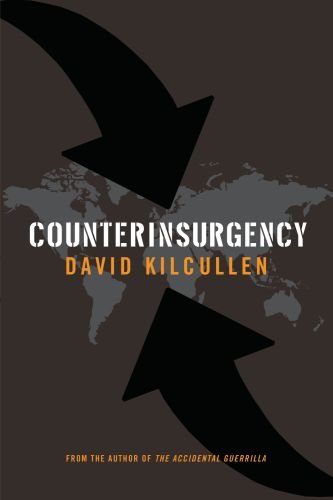
Counterinsurgency by David Kilcullen

The Grand Strategy of the Byzantine Empire by Edward Luttwak

Spook Country by William Gibson

Hope to start  a couple of these by the end of the month. A number of other books to be finished first.

I have a new decentralized reading strategy that seems to be helping me wad through books faster. Books that I am reading are distributed to be read in different places – one in my gym bag for the treadmill; one in my car in case there’s time to kill at an appointment or at a restaurant; one or two books downstairs to read on the couch or outside on the deck; one to take to the pool with the kids and four of five on my bedstand. There are also a store of books on my iPad, “just in case”.

The strategy allows me to concentrate on finishing several books – my “primary” reads – even as I steadily chip away at the rest and there are enough choices available to suit my mood on any given day so it doesn’t feel like I am doing a literary marathon. Books that I am focusing on, usually histories, strategic studies and social science works, I will mark up with marginalia and the others are just read without recourse to notation.

How do you handle your reading time?

Ucko on Counterinsurgency and its Discontents

Friday, July 23rd, 2010

At Kings of War, Dr. David Ucko has a must-read post on the kulturkampf of COIN (hat tip SWJ Blog):

Counterinsurgency and Its Discontents

….It might be interesting to trace how an idea so welcome less than four years ago has since fallen from grace. Was it the perceived confidence with which the concept was rolled out? Was it the perceived automacity of its widespread acceptance? Is it anger at the arguably simplistic explanation that counterinsurgency, and counterinsurgency alone, won the day in Iraq? Or is it due to a perception of counterinsurgency experts gaining power and prestige in DC by peddling a theory that is not working so well in Afghanistan?

I strongly suggest reading Ucko’s post in its entirety, but here are a few highlights:

Attempts to disaggregate theory and practice has in turn engendered the accusation that counterinsurgency is like Marxism, in that its supporters insist on the doctrine’s infallibility and claim it simply hasn’t been implemented properly. It is a powerful analogy: a concept that survives only on paper has very limited worth.

But counterinsurgency principles have shown practical value, not just in ‘counterinsurgency campaigns’, but also in other campaigns concerned with stabilisation, pacification, peacebuilding – call it what you want. This is not wholly surprising, as many of these principles are quite banal, even commonsensical:

Agree with Ucko here. If COIN’s promise has at times been oversold by its advocates, its critics have occasionally swung in the opposite direction, penning highly ideological jeremiads equating the American use of COIN in Afghanistan and Iraq with the history of 19th century  European colonialism, capitalist-imperialism a la Lenin and Hobson, as a Democratic trojan horse for GOP neoconservatism and as Ucko mentioned, even Soviet Communism. This is dressing up the less exciting valid criticisms that can be made about COIN, in theory and execution, with highly polemical nonsense typical of cable TV news shoutfests.

A powerful reason why counterinsurgency today is so unpopular is because its principles are looked upon as strategy in their own right. As should be clear, the principles and theory of counterinsurgency are only relevant as a means toward a strategic end, which itself may be more or less realistic: to help a country recover from protracted conflict; to bolster the legitimacy and reach of a government, etc. Even then, the theory is not a silver bullet but mere guidance – a collection of lessons learned – that may help in the design and implementation of an effective campaign plan, a plan that must, as counterinsurgency theory clearly stipulates, be adapted for specific environments.

Strong agreement. I have written much the same in the past as have many others. Hopefully, if it is repeated often enough the ongoing COIN debate can begin to generate more light and less heat.

But if counterinsurgency theory is just ‘useful guidance’ or ‘some ideas’, what good is it? I think our own Faceless Bureaucrat hit the nail on the head in a previous post: ‘I have suspected for a long time that COIN itself is merely the knee-jerk answer to a previous question, “Do kinetic/conventional/body-count campaigns work?”‘. I’m currently reading Keith L. Shimko‘s The Iraq Wars and America’s Military Revolution, which provides a bitter reminder of the muddy RMA-type thinking on war within the Pentagon as it invaded Iraq. The discovery of counterinsurgency as a body of theory and lessons was definitely a step forward, but today it is no longer the antithesis, but itself the thesis. Its function as a reaction to muddy thinking is still being served, but it is also being held up in its own right and subjected to critical scrutiny.

….So there is definitely a need for criticism, but the aim of such a debate should be to improve on rather than kill the scholarship. There seems to be a desire to resign the whole ‘counterinsurgency’ concept to the intellectual wastebasket, which risks sacrificing what the concept has provided: a useful starting point to understand and discuss armed conflict and political violence, issues that today need to be discussed, whether in terms of ‘counterinsurgency’ or not.

Some of this desire to “resign the whole counterinsurgency concept to the intellectual wastebasket” is actually an indirect political campaign for other things. Namely, a more isolationist/non-interventionist foreign policy and secondly, a Weinberger-Powell military posture where the US is geared up to fight the Soviet Union’s closest facsimile of the moment, is buying a half-dozen aircraft carriers and F-35’s by the hundreds and the military “doesn’t do windows” – i.e. the 95 % of security threats since the end of the Cold War. Well this is policy for a world COIN critics wished we inhabited and not the one in which we have to live.

I’m not excerpting Ucko’s conclusions, to better incentivize your reading them for yourself.

What I would add to Ucko’s list of the reasons COIN is currently under harsh scrutiny are the variables I sugggested in The Post-COIN Era is Here – economics and the tie-in to domestic politics. States like California, Illinois, Michigan, New York, New Jersey are in varying degrees of financial meltdown, as are some EU/NATO nation-states, which has brought belt-tightening back into vogue, whether it is coming from tea party rallies or pious lectures by the German Chancellor. Increased competition for scarcer dollars (or euros) is already impacting defense budgets which have to be weighed with other societal needs.  COIN, which is intensive in terms of both time and personnel, begins to look less attractive to politicians than does FID, CT, drone and cruise missile strikes or the huge contracts going to shipyards and defense companies which employ their constituents back home.

Islamist insurgency may be global but all politics remain local.

“The Enemy of my Enemy is…?”

Thursday, July 22nd, 2010

This is interesting. Age-old, conventional strategic wisdom is supported by social network mapping research involving 300,000 ppl:

‘The Friend of My Enemy Is My Enemy’: Virtual Universe Study Proves 80-Year-Old Theory on How Humans Interact

ScienceDaily (July 20, 2010) – A new study analysing interactions between players in a virtual universe game has for the first time provided large-scale evidence to prove an 80 year old psychological theory called Structural Balance Theory. The research, published in the Proceedings of the National Academy of Sciences, shows that individuals tend to avoid stress-causing relationships when they develop a society, resulting in more stable social networks.

The study, carried out at Imperial College London, the Medical University of Vienna and the Santa Fe Institute, analyses relationships between 300,000 players in an online game called Pardus (http://www.pardus.at/). In this open-ended game, players act as spacecraft exploring a virtual universe, where they can make friends and enemies, and communicate, trade and fight with one another.

Structural Balance Theory is an 80 year old psychological theory that suggests some networks of relationships are more stable than others in a society. Specifically, the theory deals with positive and negative links between three individuals, where ‘the friend of my enemy is my enemy’ is more stable (and therefore more common) than ‘the friend of my friend is my enemy’.

….The authors found that in positive relationships, players are more likely to reciprocate actions and sentiments than in negative ones. For example, if player A declares player B to be their friend, player B is likely to do the same. If player A declares player B to be their enemy, however, player B is not likely to reciprocate.

The research also revealed strong interactions between different types of links, with some networks overlapping extensively, as players are likely to engage in similar interactions, and others tending to exclude each other. For example, friendship and communication networks overlap: as we would expect, friends tend to talk to each other. However, trade and hostility did not overlap at all, showing that enemies tend not to trade with one another.

Dr Renaud Lambiotte said: “This may seem like an obvious finding, as we would all prefer to communicate more with people we like. However, nobody has shown the evidence for this theory on such a large scale before.”

Read the rest here.

First, I wonder what Valdis Krebs thinks of this study?

Second, does this bear out on larger scale entities that cultivate primary loyalties?

Angelo Codevilla – America’s Milovan Djilas

Tuesday, July 20th, 2010


Older readers may recall the once famous but now largely forgotten Cold War figure of Milovan Djilas. While other dissidents from Communism like Andrei Sakharov, Aleksandr Solzhenitsyn and Whittaker Chambers acheived a more epic historical stature, Djilas was the first high Communist official, the adviser and likely successor to Yugoslavian dictator Tito, to turn against Communism as a system. More importantly, Djilas wrote New Class in 1957, a damning analysis that accurately castigated the hierarchy of Communist Party and government officials an exploitive and tyrannical ruling class that in the Soviet context was later termed “Nomenklatura“. For this act, Djilas would suffer in Tito’s prisons, but he outlived both Tito and Communism and his Party enemies were never able to shake off the truth of his bitter critique.

Claremont scholar and Boston U. international relations professor Angelo Codevilla has published in The American Spectator a very lengthy, often brilliant, sometimes meandering, essay that is part analysis, part cri de coeur, but primarily the most devastating attack on America’s emerging, bipartisan, technocratic Oligarchy that I have ever read:

America’s Ruling Class — And the Perils of Revolution

….Never has there been so little diversity within America’s upper crust. Always, in America as elsewhere, some people have been wealthier and more powerful than others. But until our own time America’s upper crust was a mixture of people who had gained prominence in a variety of ways, who drew their money and status from different sources and were not predictably of one mind on any given matter. The Boston Brahmins, the New York financiers, the land barons of California, Texas, and Florida, the industrialists of Pittsburgh, the Southern aristocracy, and the hardscrabble politicians who made it big in Chicago or Memphis had little contact with one another. Few had much contact with government, and “bureaucrat” was a dirty word for all. So was “social engineering.” Nor had the schools and universities that formed yesterday’s upper crust imposed a single orthodoxy about the origins of man, about American history, and about how America should be governed. All that has changed.

Today’s ruling class, from Boston to San Diego, was formed by an educational system that exposed them to the same ideas and gave them remarkably uniform guidance, as well as tastes and habits. These amount to a social canon of judgments about good and evil, complete with secular sacred history, sins (against minorities and the environment), and saints. Using the right words and avoiding the wrong ones when referring to such matters — speaking the “in” language — serves as a badge of identity. Regardless of what business or profession they are in, their road up included government channels and government money because, as government has grown, its boundary with the rest of American life has become indistinct. Many began their careers in government and leveraged their way into the private sector. Some, e.g., Secretary of the Treasury Timothy Geithner, never held a non-government job. Hence whether formally in government, out of it, or halfway, America’s ruling class speaks the language and has the tastes, habits, and tools of bureaucrats. It rules uneasily over the majority of Americans not oriented to government.

The two classes have less in common culturally, dislike each other more, and embody ways of life more different from one another than did the 19th century’s Northerners and Southerners — nearly all of whom, as Lincoln reminded them, “prayed to the same God.” By contrast, while most Americans pray to the God “who created and doth sustain us,” our ruling class prays to itself as “saviors of the planet” and improvers of humanity. Our classes’ clash is over “whose country” America is, over what way of life will prevail, over who is to defer to whom about what. The gravity of such divisions points us, as it did Lincoln, to Mark’s Gospel: “if a house be divided against itself, that house cannot stand.”

That passage captures the zeitgeist. Read Dr. Codevilla’s article in in its’ entirety here.

I am not in harmony with everything Codevilla has written. Neither is Dr. James Joyner. Codevilla’s personal, very socially conservative, cultural preferences are not mine and, like Joyner, I would quibble with some of his descriptions as immoderate. In general, this essay would have benefited from either having been edited down to be more concise or expanded into a book to leverage greater evidentiary support of diverging political worldviews, which is out there. What is hard to deny though, is that Codevilla is pointing a finger at a visceral problem of a self-aware ruling class in the process of ossifying and separating itself culturally and legally away from and over the ruled – an alien thing in American history. Something the ancient Greeks as well as the Founding Fathers would recognize as anoligarchy“, a threat to democratic self-government and constitutional liberties.

Unlike Milovan Djilas, Angelo Codevilla will not face prison or lose his job for his criticism. Our oligarchy is in its newborn infancy, but it is hungry for power, venal in its corruption, covetous of security, impatient of democratic accountability and intolerant of dissent. Beware of legislative moves, cloaked in high-sounding phrases, to regulate speech, circumscribe criticism of public officials, grant police powers to private corporations like BP, tax farm the many to benefit the few, and generally exclude the public from important policy decisions by making citizen participation in governmental process more complex, opaque, indirect, financially burdensome and personally risky.

If any proposed government action would seem likely to legitimize an activity that would be unethical or illegal if an ordinary person did it, that is a time to make your voice heard against going down the slippery slope.
Book Review: Koran, Kalashnikov and Laptop

Wednesday, July 7th, 2010

Koran, Kalashnikov and Laptop by Antonio Giustiozzi

I just finished reading Koran, Kalashnikov and Laptop: The Neo-Taliban insurgency in Afghanistan by historian Antonio Giustozzi who has subsequently gone on to write in rapid succession, Decoding the New Taliban: Insights from the Afghan Field and Empires of Mud, which I intend to read as well. Giustozzi is doing something important with his study of the Neo-Taliban insurgency that twenty years ago, a professional historian would have eschewed: applying his his historical expertise and methodology in a disciplinary synthesis to understand a dynamic, emerging, phenomenon at the center of current policy.

At the outset, Giustozzi writes:

This book is written by a historian who is trying to understand contemporary developments making use of not just the historical method, but also drawing from other disciplines such as anthropology, political science and geography. As a result, this book combines an analysis of the development of the insurgency based on available information with my ongoing work, focused on identifying the root causes of the weakness of the Afghan state.


This is a useful investigative methodological approach. “Useful” in the sense that while adhering to scholarly standards, Giustozzi offers readers the benefit of his capacity as a professional historian to evaluate new information about the war with the Neo-Taliban, while orienting it in the appropriate cultural-historical context. Not all of the information dealt with is reliable; Giustozzi candidly explains the disputes around particular unverified claims or accusations before offering his educated guess where the truth may be or the probabilities involved in a fog of war and ethno-tribal animosities.

Koran, Kalashnikov and Laptop is an academic book with a fairly detached tone and heavily endnoted chapters, which Giustozzi divided in the following manner:

1. Sources of the insurgency

2. How and why the Taliban recruited

3. Organization of the Taliban

4. The Taliban’s strategy

5. Military tactics of the insurgency

6. The counter-insurgency effort

The chapters have a wealth of detail, bordering at times on minutia, on Afghanistan’s complex and personalized system of politics which help shed light on why the effort at providing effective governance, a key COIN tenet, is so difficult. One example:

“….Strengthened as it was by powerful connections in Kabul, Sher Mohammed’s ‘power bloc’ proved quite resilient. Some of the Kabul press reported ‘criticism’, by former and current government officials from Helmand, of Daoud, whose attempts to restrain and isolate the rogue militias and police forces of helmand were described in terms of collaborationism with the Taliban. Daoud reacted by accusing the local ‘drug mafia’ of plotting against him and tried to convince President Karzai to leave him in his post, but not even British Prime Minister Tony Blair’s efforts sufficed to save him. Karzai sacked Daoud in the autumn of 2006. His replacement, Asadullah Wafa, was widely seen as a weak figure who for several months even refused to deploy to Lashkargah.”

This example is a typical one for political life in the provinces. Karzai’s counterinsurgency strategy does not have much to do with ours, and is largely antithetical to it. What we call “corruption”, Karzai sees as buying loyalty; what we call good governance, Karzai views as destabilizing his regime. We are not on the same page with Hamid Karzai and perhaps not even in the same playbook.

Giustozzi is exceptionally well-informed about Afghanistan and the political and military nuances of the old Taliban and the Neo-Taliban insurgency and the structure of Koran, Kalashnikov and Laptop is clear and well-organized. Giustozzi is informed about COIN in this context but less so generally (in a minor glitch, he posits Mao as primarily waging guerrilla war against an Imperial Japan – Mao didn’t – which did not have much of a “technological edge” – which Japan certainly did over Chinese forces, Nationalist or Communist, for most of the war) but Giustozzi is not writing to add to COIN theory literature, as he specifically noted. What the reader will get from Giustozzi is a grasp of who the Neo-Taliban are as a fighting force and the convoluted, granular, social complexity of Afghan political life in which the US is attempting to wage a COIN war.

Koran, Kalashnikov and Laptop is strongly recommended.


Switch to our mobile site