Colin Gray is one of the four or five go-to strategic thinkers around today. Joseph Nye, the father of the soft power concept, is a seminal figure in Political Science and International Relations.
….Unfortunately, although the concept of American soft power is true gold in theory, in practice it is not so valuable. Ironically, the empirical truth behind the attractive concept is just sufficient to mislead policymakers and grand strategists. Not only do Americans want to believe that the soft power of their civilization and culture is truly potent, we are all but programmed by our enculturation to assume that the American story and its values do and should have what amounts to missionary merit that ought to be universal. American culture is so powerful a programmer that it can be difficult for Americans to empathize with, or even understand, the somewhat different values and their implications held deeply abroad. The idea is popular, even possibly authoritative, among Americans that ours is not just an “ordinary country,” but instead is a country both exceptionally blessed (by divine intent) and, as a consequence, exceptionally obliged to lead Mankind. When national exceptionalism is not merely a proposition, but is more akin to an iconic item of faith, it is difficult for usually balanced American minds to consider the potential of their soft power without rose-tinted spectacles. And the problem is that they are somewhat correct. American values, broadly speaking “the American way,” to hazard a large project in reductionism, are indeed attractive beyond America’s frontiers and have some utility for U.S. policy. But there are serious limitations to the worth of the concept of soft power, especially as it might be thought of as an instrument of policy. To date, the idea of soft power has not been subjected to a sufficiently critical forensic examination. In particular, the relation of the soft power of attraction and persuasion to the hard power of coercion urgently requires more rigorous examination than it has received thus far.
….In 2007, Richard Armitage and I co-chaired a bipartisan Smart Power Commission of members of Congress, former ambassadors, retired military officers, and heads of non-profit organizations at the Center for Strategic and International Studies in Washington. We concluded that America’s image and influence had declined in recent years and that the United States had to move from exporting fear to inspiring optimism and hope.
The Smart Power Commission was not alone in this conclusion. Even when he was in the George W. Bush administration, Defense Secretary Robert Gates called on Congress to commit more money and effort to soft-power tools including diplomacy, economic assistance, and communications because the military alone cannot defend America’s interests around the world. He pointed out that military spending then totaled nearly half a trillion dollars annually, compared with a State Department budget of just $36 billion. In his words, “I am here to make the case for strengthening our capacity to use soft power and for better integrating it with hard power.” He acknowledged that for the secretary of defense to plead for more resources for the State Department was as odd as a man biting a dog, but these are not normal times. Since then, the ratio of the budgets has become even more unbalanced.
One of the ironies here, is that the United States, through the private sector production of goods, services and intellectual property, has since WWII been overwhelming successful in exporting our “soft power” into foreign cultures to an extent seldom matched in history. However, the ability of the USG to capitalize on this latent-passive global acculturation through public diplomacy has ranged from minimal to excruciatingly counterproductive when our words, deeds and image are in serious disharmony.
My students watched this and reacted by defining themselves as those who were creative mostly through social collaboration but a decided minority required solitude and an environmental filter to think clearly and creatively – not a catalyst of a series of social-intellectual stimuli. For them, the cognitive load generated by the environment amounted to an overload, a distracting white noise that short-circuited the emergence of good ideas.
This suggests to me that there are multiple and very different neuronal pathways to creativity in the brain and a person’s predisposition in their executive function, say for example the classic “ADHD” kid at the back of the class, may have different requirements to be creative than a peer without that characteristic. It also means that creativity may be subject to improvement if we can cultivate proficiency in several “styles” of creative thinking.
Narcos Over the Border: Gangs, Cartels and Mercenaries by Dr. Robert J. Bunker (Ed.)I just finished my review copy of Narcos Over the Border. It is one of the more disturbing academic works recently published in the national security field, not excluding even those monographs dealing with Islamist terrorism and Pakistan. If the authors of this granular examination of Mexico’s immense problems with warring narco-cartels, mercenary assassins, systemic corruption, 3rd generation gangs and emerging “Narcocultas”of Santa Muerteare correct – and I suspect they are – Mexico’s creeping path toward state failure reprsents a threat to American national security of the first order.
The 237 page, heavily footnoted, book is organized into three sections: Organization and Technology Use by the narcos networks, Silver or Lead on their carrot and stick infiltration/intimidation of civil society and the state apparatus, and Response Strategies for the opponents of the cartels. Bunker’s co-authors Matt Begert, Pamela Bunker, Lisa Campbell, Paul Kan, Alberto Melis, Luz Nagle, John Sullivan, Graham Turbiville, Jr., Phil Wiliams and Sarah Womer bring an array of critical perspectives to the table from academia, law enforcement, intelligence, defense and security fields as researchers and practitioners. The effort to blend disciplinary approaches in Narcos Over the Border is both an intentional and commendable effort to break down academic and policy silos and bureaucratic “turf” perspectives that prevent analyzing Mexico’s security dilemmas as an interrelated threat increasingly resembling a full-fledged insurgency (albeit not on the classic Maoist Model).Some impressions I gained from reading Narcos Over the Border include:
The Narco-Cartels and theZetas, which fight each other as well as Mexico’s military ( Mexican police generally are infiltrated, intimidated, outgunned and seriously outclassed by the Cartel gunmen, Zetas and Guatemalan Kaibiles) are better armed and better trained than are the Taliban. The deadly and efficient Zetas and Kaibiles are superior to regular Mexican military forces and have established safe haven training camps in Central America.
Narco-cartels are properly speaking, no longer narco-cartels but transnational criminal syndicates involved in a wider array of revenue generating activities, but with professional intelligence and military capabilities, and increasingly, political, social and religious agendas that are functionally reminiscient of Hezbollah and HAMAS.
The Mexican state is severely hampered in it’s response to the threat presented by the cartels by it’s own strategic use of corruption as a cost saving measure and a tool for sustaining elite control of Mexican politics, as well as a method of personal enrichment by members of Mexico’s ruling class.
The eschewing of the extreme violence by the cartels North of the border appears to be more of a sign of a strategic policy by cartel and Zeta bosses than a lack of capacity or evidence of a lack of infiltration into American society. To the contrary, Mexican cartel links to acutely dangerous American prison and street gangs such as the Mexican Mafia and MS-13 are significant and well documented.
The cartels are global, not regional or local operators.
The culture of the Narco-cartels, which draws on some romantic Mexican social and religious underground traditions, particularly the hybrid cartelLa Familia, is morphing into a very dangerous “Narcocultas”, a neo-pagan, folk religion featuring ritualistic violence, beheadings and torture-murders carried out for reasons other than economic competition.
Mexico has departed the realm of having a serious law enforcement problem and has graduated to a significant counterinsurgency war against the cartels in which the Mexican state is treading water or making progress against some cartels (possibly displacing their activities to weaker states in Central America).
The authors do not assume the worst case scenario, state collapse, for Mexico but rather an insidious “hollowing out” of the state by the cartels and a mutation of Mexico’s native culture to host a 4GW nightmare. As Robert Bunker writes:
What is proposed here is that Mexico is not on it’s way to becoming a “rotting corpse” but potentially something far worse – akin to a body infected by a malicious virus. Already, wide swaths of Mexico have been lost to the corrupting forces and violence generated by local gangs, cartels and mercenaries. Such narco-corruption faced few bariers given the fertile ground already existing in Mexico derived from endemic governmental corruption at all levels of society and in some ways, it even further aided the ‘virus’ spreading through Mexican society from this new infection. Among it’s other symptoms, it spreads values at variance with traditional society, including those:
….conceivably derived from norms based on slaveholding, illicit drug use, sexual activity with minors and their exploitation in prostitution, torture and beheadings, the farming of humans for body parts, the killing of innocents for political gain and personal gratification and the desecration of the dead.
While meticulous, Narcos Over the Border is not all-encompassing in scope. A fundamentally Mexico-centric collection of scholarly articles, it does not deal extensively with American policy makers involved in Mexico’s narco-insurgency, the intricacies of cartel financial operations or undertake case studies of narco activities in Mexican-American communities, though the authors do track narco-cartel and gang presence in cyberspace. Narcos Over the Borders represents a starting point for deeper investigation of narco-insurgency and for a national security comunity that has thus far treated Mexico as a third tier problem, a policy call to arms.Strongly recommended.
Going to try to catch up this week on the backlog of book reviews I need to do, particularly those books sent to me by publishers. I may have to break down and do a set of mini-reviews, so far behind I have gotten myself.
So, naturally, that was a suitable pretext to order more books 🙂
Luttwak’s book is a strategy classic and I recently enjoyed his Grand Strategy of the Byzantine Empire. I first heard of Stefan Zweig from Lexington Green but nearly everyone who has read The World of Yesterday that I have encountered has raved about it, so I am looking forward to that one. Why the West Rules- For Now is another rec from the Chicago Boyz crowd but I do not think that anyone has reviewed it there as of yet. Finally, I am pairing War Before Civilization with Azar Gat’s War in Human Civilization – have a sense that Gat’s ideas may be somewhat in tune with Martin van Creveld.
A busy day for blogfriends and associates….want to draw your attention to a few highlights:
First, congratulations to Matt Armstrong ofMountainRunneron his new appointment as Executive Director of the US Advisory Commission on Public Diplomacy. It’s hard to think of anyone better qualified than Matt!
The U.S. Advisory Commission on Public Diplomacy is charged with appraising U.S. Government activities intended to understand, inform, and influence foreign publics. The Commission formulates and recommends to the President, the Secretary of State, and Members of Congress policies and programs to carry out the public diplomacy functions vested in the State Department, Broadcasting Board of Governors, and other government agencies, as well as appraising the effectiveness of the public diplomacy policies and programs carried out by government agencies.
There are seven members on the Commission, with “not more than four members may be from one political party.” In February, the White House sent to the Senate four nominations for the Commission.
Today, Matt Armstrong, author and publisher of MountainRunner.us, was sworn in as the Executive Director of the Advisory Commission. The immediate impact is the suspension of blogging, including the publishing of guest posts, at MountainRunner.us.
Secondly, Steven Pressfieldhas a new book out, titled Do The Work, in Kindle format and, for a limited time, it is free! One of the great things about Steve is that as an author, he gives back to his readership in myriad ways and isn’t afraid to break new ground:
Never before done in the history of the publishing industry has this been done before (as far as we know, and we’ve checked) and we are so proud to be offering this phenomenal opportunity to our readership and the world.
General Electric has become our “Launch a Book” sponsor for Do the Work, our latest release from The Domino Project.
What this means for you, the reader, is that you have access to the digital edition of this book for FREE. It won’t be free forever, so you should act now to grab your free copy. Order it here and it will be automatically delivered on pub date. You can read it on a Kindle, an iPad, an iPhone a PC and more. (If you already ordered your copy, your payment will be credited back to you…
Dr. Thomas P.M. Barnettthrew some props my way for the Wikistratfuturist simulation on Turkey and managed to find a few sentences from my section that were non-abstruse and jargon-free 🙂 . The nice thing about the analytical process at Wikistrat is that people can grasp the part of the scenario where their strengths are emphasized ( I looked at possible external strategic options and impacts and left Turkish internals to those who could better drill-down):
One of the most interesting things we do in Wikistrat is Scenario Planning. Through the use of live collaborative simulations, our analysts and subscribers alike engage in the mapping of scenarios, country interests and policy options on a given issue. We ran such drills on Egypt (The Egypt War Room) and on the “Sudden death of Kim Jong Il“.
Our current Simulation is on Turkey, and deals with its political and economic rise in the Middle East, its implications and potential pathways. So far several interesting scenarios were mapped, as well as interests and policy objectives for major regional and global powers affected by Turkey’s Rise.
Essentially we ask – Will Turkey’s rise continue? Will its relations with the West deteriorate given its “Shift eastward”? And- How should the US, the EU, Israel, Iran and the KSA react? [….]
Zenpundit is a blog dedicated to exploring the intersections of foreign policy, history, military theory, national security,strategic thinking, futurism, cognition and a number of other esoteric pursuits.
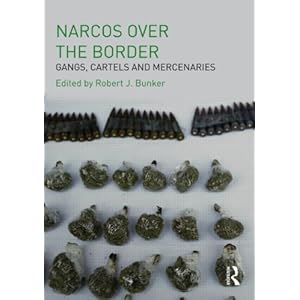
 by Dr. Robert J. Bunker (Ed.)I just finished my review copy of Narcos Over the Border. It is one of the more disturbing academic works recently published in the national security field, not excluding even those monographs dealing with Islamist terrorism and Pakistan. If the authors of this granular examination of Mexico’s immense problems with warring narco-cartels, mercenary assassins, systemic corruption,


 understand, inform, and influence foreign publics. The Commission formulates and recommends to the President, the Secretary of State, and Members of Congress policies and programs to carry out the public diplomacy functions vested in the State Department, Broadcasting Board of Governors, and other government agencies, as well as appraising the effectiveness of the public diplomacy policies and programs carried out by government agencies.