Cameron on “A Translation of Abu Walid al-Masri’s Reply”
Thursday, June 17th, 2010Charles Cameron, my regular guest blogger, is the former Senior Analyst with The Arlington Institute and Principal Researcher with the Center for Millennial Studies at Boston University. He specializes in forensic theology, with a deep interest in millennial, eschatological and apocalyptic religious sects of all stripes.
Zen here – some background prior to Cameron’s guest post. As I mentioned previously, Charles, a while back, posted a deeply reflective essay here at ZP and at Leah Farrall’s All Things Counterterrorism, in response to the unusual dialogue that Farrall, a former Australian counterterrorism official, was having with Abu Walid al-Masri, an Egyptian strategist of jihad, a sometime critic of al Qaida and an adviser to the Taliban. In other words, al-Masri is an influential voice on “the other side” of what COIN theorists like Mackinlay and Kilcullen call the “globalized insurgency” and a theorist of insurgency himself. After some delay, al-Masri responded to Charles, as Farrall described:
Abu Walid al Masri responds to Charles Cameron
Abu Walid has responded a letter from Charles Cameron. Abu Walid’s response to Charles can be found here. You’ll notice when following the link, that he has a new website.It’s well worth a look. There is also an interesting comment from a reader below Abu Walid’s response to Charles; it’s from “one of the victims of Guantanamo”.
As you’ll see from his website Abu Walid is also engaging in a number of other interesting dialogues at the moment, which I am interested to read as they progress.Charles wrote his letter in response to the dialogue Abu Walid and I had a little while back. For those of you new to the site, you can find this dialogue to the right in the page links section. The letter from Charles can be found on my blog here.
….These letters may not change anything, but they are important because in mass media sometimes only the most controversial and polarising views tend to make it into the news.I think person to person contact, especially via mediums like this, can go some way to providing opportunities for all of us to discover or be reminded that there is more than one viewpoint and along with differences there are also similarities. Contact like this humanizes people, and in my book that’s never a bad thing.
With that context in mind, we will now let Charles take it away:
A TRANSLATION of ABU WALID al-MASRI’S REPLY
by Charles Cameron
I asked a native-speaking grad student associate of mine to give me a literal translation of Abu Walid’s response to my post, and then tweaked it to give it a reasonable combination of accuracy and fluency, and my associate has kindly given the result his thumbs up — so what follows is probably fairly close to the sense of Abu Walid’s original.
*
Is this a return to the Age of Chivalry? — Comments on the Response of Charles Cameron
May 31, 2010
Author: Mustafa Hamed, Abu al-Walid al-Masri
MAFA: The Literature of the Outlaws
Charles Cameron’s words, in his comment on the dialog between myself and Ms. Leah Farrall, were wonderful, both for their humanitarian depth and in their high literary style, which makes it difficult for any writer to follow him. He puts me in something of a dilemma, fearing any comparison that might be made between us in terms of beauty of style or depth and originality of ideas — but in my capacity as one of those adventurous “outlaws”, I will try to contemplate, rather than compete with, his response, since this is what logic and reason call for.
Charles Cameron was deeply in touch with the roots of the problem that the world has (justly or unjustly) called the war on terror: it is a cause that relates to the sanctity of the human individual, and his rights and respect, regardless of any other considerations around which the struggle may revolve.
No one can argue about the importance of peace, or the need all humans have for it, nor can anyone argue that war is not hideous, and universally hated. And yet wars are still happening, and their scope is even increasing.
And now the West claims: it is terrorism — as if war on the face of the earth were the invention of Bin Laden and al-Qaida — and all this, while many others are arguing ever more forcefully that the opposite is true, that al-Qaida and Bin Laden are the invention of war merchants, and that no one can definitely declare as yet — in an unbiased and transparent way — who caused the events of September 11 and the deaths of three thousand persons.
It is not only the one who pulls the trigger who is the killer, as we know — the one who set the stage for a crime to be committed, who arranges the theatre, and opens the doors, and lures or hires the one who pulls the trigger is even more responsible. He’s the one, after all, who carries away the spoils of the crime, then chases down the trigger-man and finishes him off — not for the sake of justice, nor for love of humanity, but to hide the evidence of the crime, to erase his own fingerprints, and assassinate the witnesses who could implicate him.
For example: was the execution of Saddam Hussein really about bringing justice? Of course not. They executed him after a travesty of a trial for the most trivial of his crimes. Nobody, however, asked him about his most significant crimes — they killed him before he could admit to them, or name the major partners who brought him to the apex of his power, and provided him with a full range of lethal weaponry including weapons of mass destruction, so he could perform mass murder with confidence in his own impunity.
I personally (and here I speak only for myself, so Ms. Farrall need not get irritated) would have preferred to have Charles Cameron as President of the US and a united Europe and the leader of NATO — then there would have been no wars in Afghanistan or Iraq, and the problem of terrorism would have ended in minutes, along with the problems in the Middle East, and nuclear militarization, and even those of poverty and pollution. Why? Because not a single one of these problems can be solved except through the logic of humanitarianism, of justice, and love for people and peace, and hatred of oppression and discrimination between people in any form — we are all the creatures of God, and to Him we shall all return.
I am reminded of Richard the Lionheart, who came to lead a big crusade to capture Jerusalem from Muslim hands. The bloody wars he led brought fatigue to everyone and benefited neither the religious or nor the day-to-day interests of either party. Leading the Muslim campaign was Sultan Salah al-Din al-Ayyubi (Saladin), King Richard’s peer in courage, chivalry and wisdom.
Both parties finally agreed that Jerusalem should remain in Muslim hands — hands which would guarantee its security and that of its people, and of both the Islamic and Christian sanctuaries, preserving their interests and protecting the sanctuaries of all, in peace.
Thereafter, King Richard retreated from Muslim lands, carrying with him a most favorable impression of the Muslims and of Saladin as he returned to his own country, while leaving a continuing memory of respect and appreciation for himself and his chivalry with Saladin and the Muslims — which is preserved in our history books down to the present day.
It was Mr. Cameron’s spirit of fairness, chivalry and true spirituality that reminded me of King Richard’s character — but sadly, it is very difficult to find a ruler in the west like King Richard, and I find it even more regrettable that Muslims should have even greater difficulty finding among themselves a ruler like Saladin.
This is because things are on the wrong track, and people are not in their rightful positions. The wrong people are in power and leading us, while the best among us are weak and under siege.
No human likes or wants this state of affairs — but are the people who are in control of this planet real human beings? Can we consider those who own 50% of the earth’s wealth human, even though they comprise no more than 2% of the human population?
In my opinion, the situation is much worse than these international statistics suggest. I believe the number of those who rule the world is far fewer, and that they own much more. They are the ones who invest in all kinds of wars wherever, and under whatever name or banner, they may be found. The mention of war translates to these people as an immediate waterfall of gold tumbling into their usurious bank vaults, which hold the world — both leaders and led — by the neck.
I speak here of all wars without exception, whether they be the First and Second World Wars, or the wars in Korea and Vietnam, or the First and Second Gulf Wars, or the Third and Fourth, yet to come — whether it be a war in Afghanistan (to hunt for the “Bin Laden and al-Qaida” mirage) or in Iraq (looking for illusory “weapons of mass destruction”) or in Bosnia, Somalia or Africa — that continent of eternal wars for the sake of gold or oil fields — Africa, that colonized continent of disease, covertly modernized in the labs of the secret services and giant pharmaceutical companies.
I wish we could return to the age of chivalry– of courageous and rightly religious knights — for then wisdom would prevail and peace would spread, and we could leave this age of the brokers and merchants of war behind us.
Muslims always call on God to bless them with a leader such as Saladin , and I think they should also pray for God to bless the West with a ruler such as Richard the Lionheart — because without a Saladin here and a Richard there, the fires of war will continue to blaze. That’s the reason the brokers of wars will not allow the appearance of a Saladdin here, nor a Richard there.
By means of the laws to fight terrorism, the emergency laws, NATO, the Security Council and the International Court of Justice, the various counter-terrorism forces around the world, the CIA and FBI, and the Army and National Guard, the Patriot Act in the US, the jails at Guantanamo and Abu Ghraib and Bagram — and the secret “black sites” and “floating prison ships”– by all these means and many others, they kill and jail and start wars, so that humans (and terrorists) are not threatened by the likes of the two great kings, Saladin and Richard.
Therefore in the situation we find ourselves in now — despite our noble dreams of an age of knighthood and chivalry as an alternative to this age of broker kings — the destiny of all humanity, and even planet earth itself, remains in question. Of course there will be an end to all this someday… but how??… and when?? I do not think any one of us has the answer.
Finally I would like to thank Charles Cameron for his care in writing and commenting, and to express again my thanks to Ms. Leah Farrall, who deserves all the credit for initiating these dialogues.
Signed: Mustafa Hamed, Abu al-Walid al-Masri
 by
by 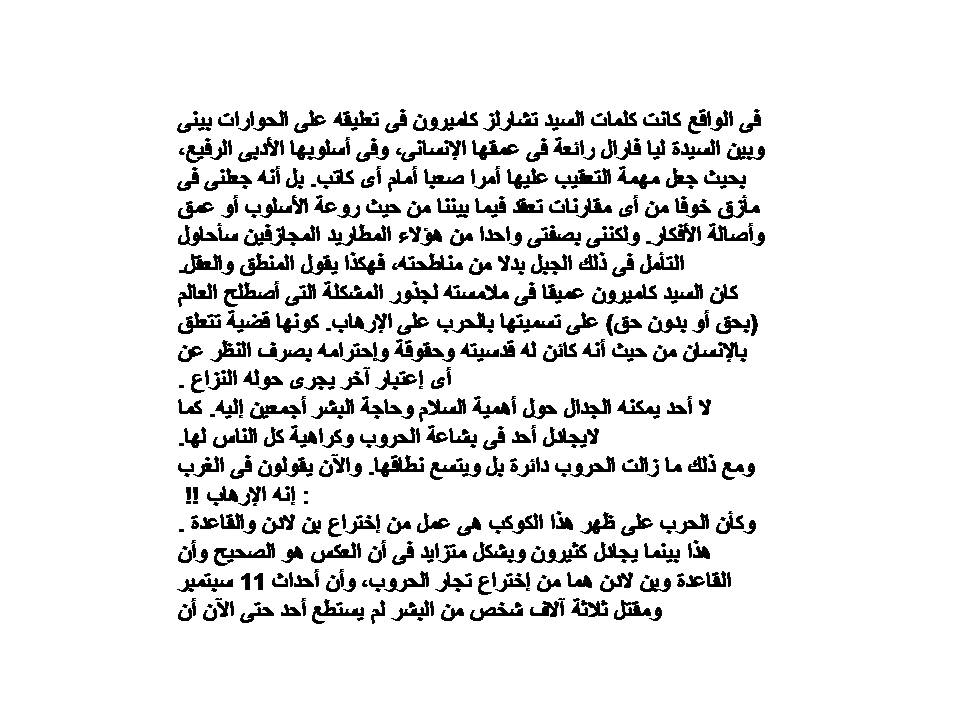

 and
and  , was embedded along with photojournalist Tim Hetherington, with 2nd Platoon during their COIN campaign in Korengal, a mission that resulted in some of the bloodiest firefights and highest American casualties of the Afghan war

