zenpundit.com » 4GW

Archive for the ‘4GW’ Category

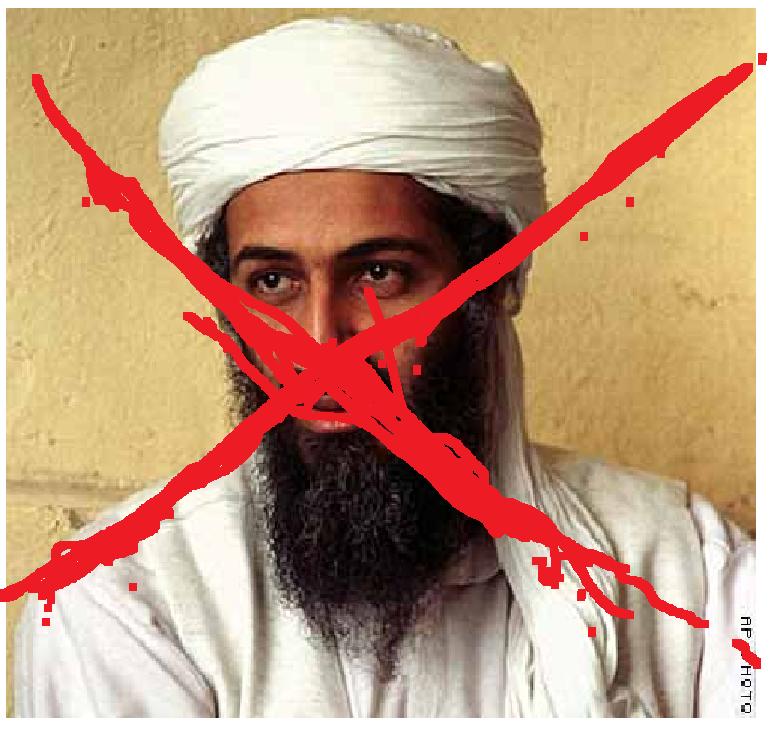
BIN LADEN DEAD

Monday, May 2nd, 2011

binladendead2.jpg

May he rot in Hell. 

Osama Bin Laden, sponsor of 9-11 and founder of al Qaida is dead, killed in Pakistan by a US JSOC-CIA team, possibly with Pakistani cooperation (or…maybe not).

Details will emerge that Bin Laden has not been in a cave for the past decade.

A great day for the United States! The Obama administration deserves credit here and the military and intelligence personnel deserve our deepest thanks!

And Taking Names!

Friday, April 22nd, 2011

Ya Mullen Huzzah!  

About  goddamn  time ….

Book Review: Narcos Over the Border by Robert J. Bunker (Ed.)

Tuesday, April 5th, 2011

Narcos Over the Border: Gangs, Cartels and Mercenaries by Dr. Robert J. Bunker (Ed.)I just finished my review copy of Narcos Over the Border. It is one of the more disturbing academic works recently published in the national security field, not excluding even those monographs dealing with Islamist terrorism and Pakistan. If the authors of this granular examination of Mexico’s immense problems with warring narco-cartels, mercenary assassins, systemic corruption, 3rd generation gangs and emerging “Narcocultas”of Santa Muerte are correct – and I suspect they are – Mexico’s creeping path toward state failure reprsents a threat to American national security of the first order.

The 237 page, heavily footnoted, book is organized into three sections: Organization and Technology Use by the narcos networks, Silver or Lead on their carrot and stick infiltration/intimidation of civil society and the state apparatus, and Response Strategies for the opponents of the cartels. Bunker’s co-authors Matt Begert, Pamela Bunker, Lisa Campbell, Paul Kan, Alberto Melis, Luz Nagle, John Sullivan, Graham Turbiville, Jr., Phil Wiliams and Sarah Womer bring an array of critical perspectives to the table from academia, law enforcement, intelligence, defense and security fields as researchers and practitioners. The effort to blend disciplinary approaches in Narcos Over the Border is both an intentional and commendable effort to break down academic and policy silos and bureaucratic “turf” perspectives that prevent analyzing Mexico’s security dilemmas as an interrelated threat increasingly resembling a full-fledged insurgency (albeit not on the classic Maoist Model).Some impressions I gained from reading Narcos Over the Border include:

  • The Narco-Cartels and the Zetas, which fight each other as well as Mexico’s military ( Mexican police generally are infiltrated, intimidated, outgunned and seriously outclassed by the Cartel gunmen, Zetas and Guatemalan Kaibiles) are better armed and better trained than are the Taliban. The deadly and efficient Zetas and Kaibiles are superior to regular Mexican military forces and have established safe haven training camps in Central America.
  • Narco-cartels are properly speaking, no longer narco-cartels but transnational criminal syndicates involved in a wider array of revenue generating activities, but with professional intelligence and military capabilities, and increasingly, political, social and religious agendas that are functionally reminiscient of Hezbollah and HAMAS.
  • The Mexican state is severely hampered in it’s response to the threat presented by the cartels by it’s own strategic use of corruption as a cost saving measure and a tool for sustaining elite control of Mexican politics, as well as a method of personal enrichment by members of Mexico’s ruling class.
  • The eschewing of the extreme violence by the cartels North of the border appears to be more of a sign of a strategic policy by cartel and Zeta bosses than a lack of capacity or evidence of a lack of infiltration into American society. To the contrary, Mexican cartel links to acutely dangerous American prison and street gangs such as the Mexican Mafia and MS-13 are significant and well documented.
  • The cartels are global, not regional or local operators.
  • The culture of the Narco-cartels, which draws on some romantic Mexican social and religious underground traditions, particularly the hybrid cartel La Familia , is morphing into a very dangerous “Narcocultas”, a neo-pagan, folk religion featuring ritualistic violence, beheadings and torture-murders carried out for reasons other than economic competition.
  • Mexico has departed the realm of having a serious law enforcement problem and has graduated to a significant counterinsurgency war against the cartels in which the Mexican state is treading water or making progress against some cartels (possibly displacing their activities to weaker states in Central America).

The authors do not assume the worst case scenario, state collapse, for Mexico but rather an insidious “hollowing out” of the state by the cartels and a mutation of Mexico’s native culture to host a 4GW nightmare. As Robert Bunker writes:

What is proposed here is that Mexico is not on it’s way to becoming a “rotting corpse” but potentially something far worse – akin to a body infected by a malicious virus. Already, wide swaths of Mexico have been lost to the corrupting forces and violence generated by local gangs, cartels and mercenaries. Such narco-corruption faced few bariers given the fertile ground already existing in Mexico derived from endemic governmental corruption at all levels of society and in some ways, it even further aided the ‘virus’ spreading through Mexican society from this new infection. Among it’s other symptoms, it spreads values at variance with traditional society, including those:

….conceivably derived from norms based on slaveholding, illicit drug use, sexual activity with minors and their exploitation in prostitution, torture and beheadings, the farming of humans for body parts, the killing of innocents for political gain and personal gratification and the desecration of the dead.

While meticulous, Narcos Over the Border is not all-encompassing in scope.  A fundamentally Mexico-centric collection of scholarly articles, it does not deal extensively with American policy makers involved in Mexico’s narco-insurgency, the intricacies of cartel financial operations or undertake case studies of narco activities in Mexican-American communities, though the authors do track narco-cartel and gang presence in cyberspace. Narcos Over the Borders represents a starting point for deeper investigation of narco-insurgency and for a national security comunity that has thus far treated Mexico as a third tier problem, a policy call to arms.Strongly recommended.

Corn’s Caliphates in Wonderland

Saturday, March 26th, 2011


They Just Don’t Make Caliphates Like They Used To….

SWJ Blog featured a lengthy (30 page) essay by Dr. Tony Corn on….well….many things. Corn begins with caliphates and then sort of takes off much like a blown up balloon abruptly released by a child prior to tying a knot in the end.

The Clash of the Caliphates: Understanding the Real War of Ideas by Dr. Tony Corn

….For one thing, within the global umma, there appears to be as many conceptions of the ideal Caliphate as there are Muslims. This grass-roots longing for a symbol of unity should be heard with the proverbial Freudian -third ear,?? and seen for what it really is, i.e., a symptom rather than a disease. For another, by agreeing to establish diplomatic relations with the 57-member Organization of the Islamic Conference (OIC), America and Europe have, in essence, already granted the OIC the status of a Quasi-Caliphate.

More important still, it is time for Western policy-makers to realize that the ideological rivalry between Saudi Arabia and Iran that has been going on since 1979 constitutes nothing less than a Clash of the Caliphates. Through a soft power strategy blurring the distinction between -public diplomacy?? and -political warfare,?? -humanitarian aid?? and -religious propaganda,?? the two states have been the main drivers of the re-Islamization process throughout the Muslim world. The one-upmanship dynamic generated by the rivalry between these two fundamentalist regimes is the main reason why, from the Balkans to Pakistan, the re-Islamization of the global umma has taken a radical, rather than moderate, dimension.

Ok, “caliphates” as a metaphor/analogy for geopolitical rivalry of Muslim states works but it is not really what Islamists or normal Muslims would mean by the term. It is a very odd usage. I’m not overly bothered by that because I tend to like analogies but Corn’s device here is apt to make the heads of area studies and Islamic history scholars explode. The whole essay is in this meandering, idiosyncratic, vein.

Now that is not to suggest that you should not read the piece. Dr. Corn held my attention all the way through and he has a number of excellent observations on many, loosely related, subjects. For example, after discussing the pernicious effects of Saudi donations and Edward Said’s agitprop theory of “Orientalism” on the intellectual objectivity of academia, Corn writes:

…The combined effect of the House of Saud and the House of Said is the first reason why the Ivory Tower has done such a poor job identifying the nature of Muslim Exceptionalism. A more indirect, yet more insidious, reason is that, unlike in the early days of the Cold War, American academics across the board today are trained in social sciences rather than educated in the humanities. For social scientists, Explanation (erklaren) and -theory-building?? take precedence over Understanding (verstehen) and -policy-making. The victory of the -numerates over the -literates in the 1970s has produced a generation of scholars who show a certain virtuosity when it comes to -research design, but display an amazing lack, not just of historical literacy, but of -historical empathy as well. Not to make too fine a point: the Long War is being waged by a generation of policy-makers who, however articulate, never learned anything about history in their college years

Corn is spot on here. Not only is it spot on, it is likely to get much worse. After a brief qualitative “bump” from Iraq-Afghan war  language trained vets, diplos, analysts and spooks peters out, we will have the Gen Y kids with K-12 educations scrubbed free of history, foreign languages and science graduating from college with communication and marketing degrees and entering government service. Hang on to your hat when that happens.

What Corn really requires to vault his essays to the next level are the services of an experienced editor because less would be more. The man is erudite and insightful. He writes forcefully and raises a number of points that are important and with which I agree. Corn, commendably, also makes more of an effort to connect the dots than most. But maybe, if you have an essay that references David Kilcullen, Trotsky, neo-Ottomanism, lawfare, Sam Huntington, neo-COIN, Nasser, Vatican II, the Comintern, the Hapsburgs, Ataturk, public diplomacy, al- Qaradawi, social media, Fascism, Marc Lynch, Youtube, network theory, the UN, hybrid wars and the Protestant Reformation, it might be time to up the Ritalin dosage a notch. Jesus, there’s either a book proposal or four different articles in that kitchen sink of an op-ed!

Read it and take what is useful.

Farrall in Foreign Affairs:How al Qaida Works

Thursday, February 24th, 2011

Leah Farrall, the Australian former counterterrorism official who blogs at All Things Counterterrorism (and is a friend of Charles Cameron ) has an important analytical article in Foreign Affairs (hat tip to the oratorical Josh Foust):

How al Qaeda Works

Despite nearly a decade of war, al Qaeda is stronger today than when it carried out the 9/11 attacks. Before 2001, its history was checkered with mostly failed attempts to fulfill its most enduring goal: the unification of other militant Islamist groups under its strategic leadership. However, since fleeing Afghanistan to Pakistan’s tribal areas in late 2001, al Qaeda has founded a regional branch in the Arabian Peninsula and acquired franchises in Iraq and the Maghreb. Today, it has more members, greater geographic reach, and a level of ideological sophistication and influence it lacked ten years ago.

Still, most accounts of the progress of the war against al Qaeda contend that the organization is on the decline, pointing to its degraded capacity to carry out terrorist operations and depleted senior leadership as evidence that the group is at its weakest since 9/11. But such accounts treat the central al Qaeda organization separately from its subsidiaries and overlook its success in expanding its power and influence through them. These groups should not be ignored. All have attacked Western interests in their regions of operation. Al Qaeda in the Arabian Peninsula (AQAP) has also long targeted the United States, but its efforts have moved beyond the execution stage only in the last two years, most recently with the foiled plot to bomb cargo planes in October 2010. And although al Qaeda in the Islamic Maghreb (AQIM) has not yet attacked outside its region, al Qaeda in Iraq (AQI) was reportedly involved in the June 2007 London and Glasgow bomb plots.

It is time for an updated conception of al Qaeda’s organization that takes into account its relationships with its subsidiaries. A broader conceptual framework will allow for a greater understanding of how and to what degree it exercises command and control over its expanded structure, the goals driving its expansion strategy, and its tactics.

AL QAEDA’S LOST DECADE

Although al Qaeda had tried to use other groups to further its agenda in the 1980s and early 1990s, Osama bin Laden’s first serious attempts at unification began in the mid-1990s, when the organization was based in Sudan. Bin Laden sought to build an “Islamic Army” but failed. Al Qaeda had no ideology or manhaj (program) around which to build lasting unity, no open front of its own to attract new fighters, and many of its members, dissatisfied with “civilian work,” had left to join the jihad elsewhere. Faced with such circumstances, bin Laden instead relied on doling out financial support to encourage militant groups to join his army. But the international community put pressure on Sudan to stop his activities, and so the Sudanese government expelled al Qaeda from the country in 1996. As a result, the group fled to Afghanistan.

By mid-1996, al Qaeda was a shell of an organization, reduced to some 30 members. Facing irrelevance and fearing that a movement of Islamist militants was rising outside of his control, bin Laden decided a “blessed jihad” was necessary. He declared war on the United States, hoping this would attract others to follow al Qaeda. It did not. A second effort followed in 1998, when bin Laden unsuccessfully used his newly created World Islamic Front for Jihad Against Jews and Crusaders to lobby other groups to join him. Later that year, al Qaeda launched its first large-scale attacks: the bombings of the U.S. embassies in Kenya and Tanzania, which it hoped would boost its fortunes. But these, too, failed to attract other groups to join, with some instead criticizing al Qaeda for the attacks and its lack of a legitimate manhaj.

With no coherent ideology or manhaj to encourage unification under his leadership, bin Laden instead pursued a predatory approach. He endeavored to buy the allegiance of weaker groups or bully them into aligning with al Qaeda, and he attempted to divide and conquer the stronger groups. In the late 1990s, he tried and failed to gain control over the Khalden training camp, led by the militants Ibn al-Shaykh al-Libi and Abu Zubaydah, and over the activities of Abu Musab al-Suri and Abu Khabab al-Masri, senior militant figures who ran their own training programs. Bin Laden’s attempts in 1997-98 to convince Ibn al-Khattab, a Saudi militant who led an international brigade in Chechnya, to come under al Qaeda’s banner also failed. His efforts in 2000-2001 to gain control over a brigade of foreign fighters in Afghanistan met a similar fate: the Taliban leader Mullah Omar, who had supreme authority over the brigade, instead handed the leadership of it to the Islamic Movement of Uzbekistan, another group bin Laden was attempting to convince to align with al Qaeda. Around the same time, bin Laden also unsuccessfully lobbied the Egyptian Islamic Group and the Libyan Islamic Fighting Group to join al Qaeda’s efforts. And although al Qaeda supported the militant Abu Musab al-Zarqawi in his establishment of an independent training camp in Afghanistan, bin Laden was unable to convince him to formally join the organization.

The only real success during this period was al Qaeda’s mid-2001 merger with Egyptian Islamic Jihad, led by Ayman al-Zawahiri, now al Qaeda’s second-in-command. The merger was possible thanks to Egyptian Islamic Jihad’s weakened position and its reliance on bin Laden for money. The decision was nevertheless contentious within Egyptian Islamic Jihad, and several of its members left rather than join with al Qaeda. In the end, al Qaeda’s only successful merger during its Afghanistan years added just five people to its core membership. Compared to this dismal record, the past decade has been highly successful….

Read the rest here (subscription required) or for a brief time in full, for free, here.

First, I’d like to say congratulations to Ms. Farrall who has been working hard researching the nuances of ideological, theological, tactical and organizational differences and personal rivalries that existed within the mutable and murky subterranean world of professional Islamist revolutionaries. It’s important work. Her recognition in FA is deserved and American terrorism experts should give her arguments close scrutiny.

Secondly, I will say her article shows the extent to which our takfirist enemies, not just al Qaida,  take seriously the ideas behind their global insurgency and that, to them, it is both global and local. The “internationalist” jihadis like Bin Laden seek to weld themselves together with the parochial “Nationalist-Islamists” and David Kilcullen’s local “accidental guerrillas” with a “eucumenical” radical Islamism. As many USG officials seek to ignore or promote an official line of ignoring the ideological and theological motivations of our enemies, they will probably dismiss Farrall unless she gains enough media prominence that this is no longer feasible – at which point, they will make nasty and anonymous criticism about her on background to The New York Times and The Washington Post.

Thirdly, Farrall has a very important point here when she wrote:

….They drew from takfiri thought, which justifies attacking corrupt regimes in Muslim lands, and on materials that outline the Muslim requirement to target the global enemy: in this case, the United States and the West. (This was framed in the context of defensive jihad, the need for which was reinforced by the 2003 U.S. invasion of Iraq.) The hybrid ideology and manhaj that emerged make little distinction between targeting local enemies and targeting global ones and have a one-size-fits-all solution — jihad. Partnering with al Qaeda does not, therefore, require a local group to abandon its own agenda, just broaden its focus. This helped assuage other groups’ fears that merging with al Qaeda would mean a loss of autonomy to pursue their own local goals.

This is what Global Guerrilla theorist John Robb would call “a Plausible Promise“, a required step in building an “open source insurgency” which can attract groups with differing agendas, opportunitic actors and ideologically motivated, socially alienated “lone wolves” to their banner. Al Qaida has tacticians who apparently agree, having formally adopted “Open Source jihad” in late 2010. So far, the executive branch departments of the USG seem to be studiously determined to ignore that as well, a stance that corrupts our analytical integrity and cripples our operational effectiveness. Lying to oneself is rarely a good way to get an advantage over an opponent.

I think I can speak for Charles Cameron in that we here at zenpundit.com hope to see more articles from Ms. Farrall in the near future.

ADDENDUM:

SWJ BlogThe Hasan Slide Presentation A Preliminary Commentary by Charles Cameron

Switch to our mobile site