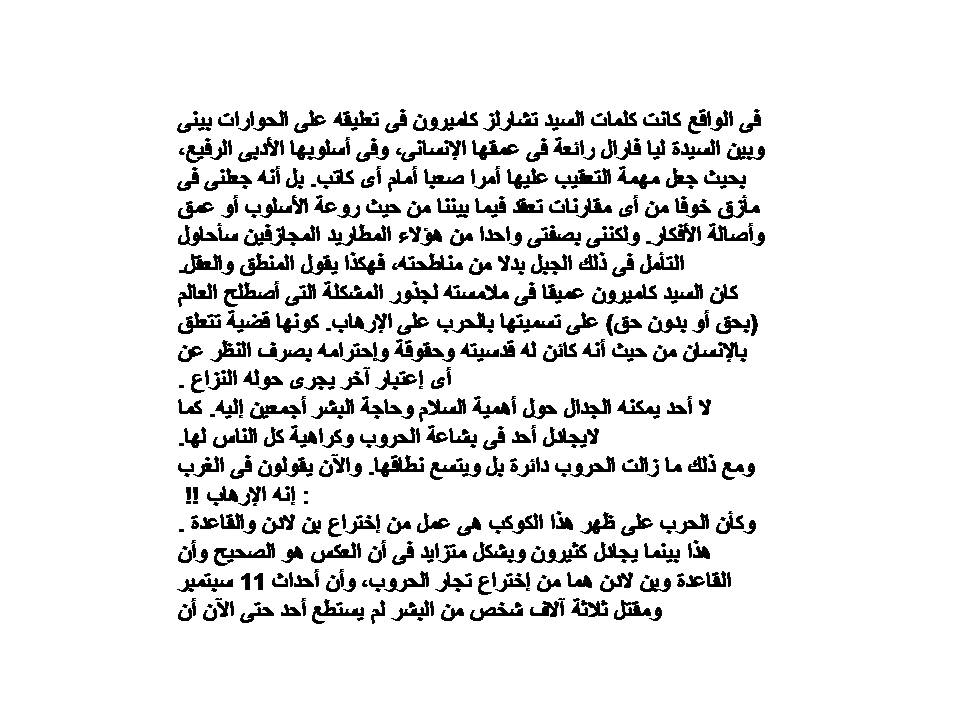
My friend and guest-blogger Charles Cameron, a while back, posted a learned essay here at ZP and at Leah Farrall’sAll Things Counterterrorism, in response to the unusual dialogue that Farrall, a former Australian counterterrorism official, was having with Abu Walid al-Masri, an Egyptian strategist of jihad, a sometime critic of al Qaida and an adviser to the Taliban. In other words, al-Masri is an influential voice on “the other side” of what COIN theorists like Mackinlay and Kilcullencall the “globalized insurgency”.
After some delay, al-Masri has responded to Charles, as Farrall describes:
Abu Walid has responded a letter from Charles Cameron. Abu Walid’s response to Charles can be found here. You’ll notice when following the link, that he has a new website.
It’s well worth a look. There is also an interesting comment from a reader below Abu Walid’s response to Charles; it’s from “one of the victims of Guantanamo”.
As you’ll see from his website Abu Walid is also engaging in a number of other interesting dialogues at the moment, which I am interested to read as they progress.
Charles wrote his letter in response to the dialogue Abu Walid and I had a little while back. For those of you new to the site, you can find this dialogue to the right in the page links section. The letter from Charles can be found on my blog here.
….These letters may not change anything, but they are important because in mass media sometimes only the most controversial and polarising views tend to make it into the news.
I think person to person contact, especially via mediums like this, can go some way to providing opportunities for all of us to discover or be reminded that there is more than one viewpoint and along with differences there are also similarities. Contact like this humanizes people, and in my book that’s never a bad thing.
Farrall is working up a translation of al-Masri’s post from Arabic ( I used Google which gives a very rough translation). Readers who are fluent are encouraged to read it in full and offer their thoughts. Here is a snippet:
Google translation is fast and dirty but it is not the best source of translation, it garbles many words and phrases that require transliteration, which is how I read al-Masri’s response. With that caveat, my impression was that he did not know quite where to go with Charles’ essay, beyond acknowledging it and then retreating to some talking points. The remarkable aspect was that al-Masri felt the need to respond at all which has sent Charles thoughts bouncing around the radical Islamist online community.
Having previously failed to break Israel’s naval blockade of Gaza that denies HAMAS war material and economic aid, a coalition of Islamists, Palestinian nationalists and Western Leftists used ships of Turkish registry. The IDF took the bait and blundered into an ambush where the commandos were promptly swarmed by the “peace activists”, overpowered (!) and then had to bloodily shoot their way out of a debacle.
Taking stock of this bit of guerrilla theater gone lethal, let’s see what the supporters of HAMAS terrorism gained:
The world is hearing a false narrative that Israel massacred unarmed peace activists.
Turkey’s ruling, authoritarian, crypto-Islamist Party has a further wedge to downgrade Turkey’s traditional military cooperation with Israel while putting political pressure on Turkish secularists and Army leaders.
Israel’s diplomatic isolation is greatly increased
Additional strain is put on the already lukewarm relationship between the Obama administration and the Netanyahu government
On the moral level of war, HAMAS supporters – whose strategic objective is to end Israel’s blockade of Gaza, so that HAMAS can rebuild it’s military strength – have scored a solid triumph while the IDF have acted with all the instinctive propensity for causing self-inflicted wounds of Richard Nixon confronting the Watergate break-in.
Because Israel is powerful and democratic and its enemies, despite their viciousness and authoritarian politics, are weak, the Israelis are not held to the same moral standards by international observers (many of whom, it must be noted, begin with a strongly anti-Israel or at least, anti-Western, orientation). In a 4GW paradigm, even acting in self-defense is not enough for a strong state to play the role of “the good guy” in a globalized media environment, unless the weak side does something that is viscerally morally repulsive – ex. Abu Zarqawi ‘s extreme brutality and lust for staging ghoulish beheadings of captives on the internet.
There seems to be a stunning political-strategic tone deafness on the part of Israeli leaders in recent years. Perhaps there is a degradition of IDF tactical excellence as well. Overpowering highly trained, heavily armed, elite commandos by untrained civilians is not possible unless said commandos were sent in poorly briefed, with unworkable ROE (IMHO, this was more likely a prepared ambush than a spontaneous act). There’s no half-way method of seizing a hostile ship by force. Either you do it swiftly, while citing appropriate legal justification or you don’t and employ a different set of responses to turn the ships away in a manner that does not alienate observers.
Military force used ineffectually is as counterproductive as force used excessively. From a Boydian strategic perspective, the initiative is lost, opponents are “pumped up” while one’s own side and sympathizers are demoralized. Political irritants become inflated into disasters. HAMAS, Hezbollah, al Qaida and similar entities are not the old, state-sponsored, state-centric, PLO and they are not playing the PLO’s game.
One could, from the start, think a number of different things about those participating in the peace flotilla to Gaza. (Naive? Righteous? Courageous? Anti-Semitic?) But for the sake of argument, and putting ourselves in the shoes of an Israeli naval commander, let’s assume the most malevolent of motivations for the people participating in the peace flotilla. If I am in charge of doing that for the Israeli Navy, I am going to assume these people are smart and are deliberately trying to provoke a crazy response from my sailors and soldiers that will produce ready-for-television images that both isolate Israel within the international community and further raise the ire of the Arabic-speaking and Islamic worlds. I mean, that is my base assumption for what this group is trying to do. So naturally, the last thing I would want my forces to do would be to overreact, right? It’s like when your convoy gets fired on inside a crowded market: the last thing you want to do is return fire with 7.62mm, killing a bunch of civilians and giving the enemy exactly the effect he was looking for.
If something does go wrong, meanwhile, I am going to have a response ready. I am going to have my very best spokespersons on international and Israeli television. I am most certainly not going to let people like Danny Ayalon provide my government’s response, right? Because a live wire like Ayalon — who the Turks already hate, with an understandable passion — will just say something incredibly crazy like how the people in the aid flotilla were terrorists with ties to al-Qaeda. (Even if you can prove this is somehow true, everyone you need to be speaking to right now — the international community, the Turkish people, the Arabic-speaking world — is just going to think you are nuts for saying it or will roll their eyes and say, “Oh, of course he’s saying that.”)
In reality, what happened today is the Israelis got their butts handed to them. The Israeli response to this aid flotilla was a fabulous gift to Hamas and Iran. (Try to imagine, if you will, the Israelis trying to go before the U.N. Security Council to gather support for sanctions on the Iranian regime right now. They would be more likely to leave New York with sanctions on their own regime!)
ADDENDUM II.
George Friedman of STRATFOR ( Hat tip toAdam Elkus)
….The bid to shape global perceptions by portraying the Palestinians as victims of Israel was the first prong of a longtime two-part campaign. The second part of this campaign involved armed resistance against the Israelis. The way this resistance was carried out, from airplane hijackings to stone-throwing children to suicide bombers, interfered with the first part of the campaign, however. The Israelis could point to suicide bombings or the use of children against soldiers as symbols of Palestinian inhumanity. This in turn was used to justify conditions in Gaza. While the Palestinians had made significant inroads in placing Israel on the defensive in global public opinion, they thus consistently gave the Israelis the opportunity to turn the tables. And this is where the flotilla comes in.
The Turkish flotilla aimed to replicate the Exodus story or, more precisely, to define the global image of Israel in the same way the Zionists defined the image that they wanted to project. As with the Zionist portrayal of the situation in 1947, the Gaza situation is far more complicated than as portrayed by the Palestinians. The moral question is also far more ambiguous. But as in 1947, when the Zionist portrayal was not intended to be a scholarly analysis of the situation but a political weapon designed to define perceptions, the Turkish flotilla was not designed to carry out a moral inquest.
Instead, the flotilla was designed to achieve two ends. The first is to divide Israel and Western governments by shifting public opinion against Israel. The second is to create a political crisis inside Israel between those who feel that Israel’s increasing isolation over the Gaza issue is dangerous versus those who think any weakening of resolve is dangerous.
Turkey’s deputy prime minister called the raid “a dark stain on the history of humanity.” So now Ankara has its bloody shirt, which will be used – once Tehran inevitably announces the weaponization of its nukes – to justify Turkey’s rapid reach for the same. Just like Tehran cannot openly rationalize its bid for regional supremacy vis-à-vis archrival Saudi Arabia, Turkey requires an appropriate villain for its nuclear morality play. Anybody watching the deterioration of Turkish-Israeli relations over the past year knew that some cause célèbre was in the works. Suddenly, if perhaps on purpose, Turkey can claim that – despite its efforts to broker a non-nuclear peace in the region (including a recent enrichment deal engineered with Brazil) – it needs its own deterrent against Israel’s nuclear arsenal, too.
Exum has some interesting reads on his desk and in his kindle that readers might find intriguing.
Andrew is, it would seem, a closet linguist of the vanished, old-school, variety that study real languages instead of investigating the neurocognitive building blocks of language:
1. Someone sent me a complimentary paper copy of Greg Gause’s new book on the international relations of the Persian Gulf states, and I cannot think of a better introduction to the region. I have only met Gause once, back in 2007, and thought him both really smart and also kind of a smart-ass. So naturally, I liked him. I also have a reading packet prepared by the CSIS, which is leading this trip, crammed full with useful CRS reports and such.
2. I convinced the team here at CNAS to buy me a paper copy of Buying National Security: How America Plans and Pays for Its Global Role and Safety at Home, which readers of this blog will remember I’m excited about. Cindy Williams and Gordon Adams are both really smart and write about something — the national security budgeting process — that is rarely understood by policy geeks like me but really important.
6. Finally, I downloaded the ESV Study Bible and Phil Ryken’s commentaries on Ecclesiastes alongside Tarif Khalidi’s new translation of the Qur’an. That may seem like an odd combination of books, but both Ryken and Khalidi have been mentors* of sorts through the years: Ryken was a pastor at the church I attended in college, and Khalidi is, well, my scholarly hero. Despite his wicked sense of humor and light-hearted spirit, Khalidi is the most intimidating intellectual I have ever met. His command of English, Arabic, Greek and Latin is simply awe-inspiring, especially for someone like me who struggles with all four, and his new translation of the Qur’an is a remarkable achievement. I’m not about to get into the different ways in which Protestant Christians and Muslims approach their respective holy texts, but I will say that I someday hope to approach at least the New Testament with the erudition with which Khalidi tackles the Qur’an. Really impressive. Khalidi’s humility** and interest in younger scholars also sets an example for others to follow.
….We can argue about how many other factors aside from U.S. diplomatic and military operations led to the stunning drop in violence in 2007. There was a civil war in 2005 and 2006, tribes from al-Anbar “flipped” in 2006, and Muqtada al-Sadr decided to keep his troops out of the fight for reasons that are still not entirely clear. Those are just three factors which might not have had anything to do with U.S. operations. But there can be no denying that a space has indeed been created for a more or less peaceful political process to take place. Acts of heinous violence still take place in Baghdad, but so too does a relatively peaceful political process.
….Violence was a problem for Iraqi civilians and for the U.S. military. Reducing violence has unquestionably served humanitarian purposes in Iraq and has also saved American lives. But that has nothing to do with “conceptual space” or the broader “success” of the surge.
I mean, come on, if you’re going to write a post that essential expects to settle a debate like this one, snark and assertions much be balanced with rigorous analysis. But Exum doesn’t demonstrate any real understanding of the dynamics of violence in civil conflicts.
My suggestion is that you first read each gentleman’s posts in their entirety.
The first part of the dispute would be what is the standard of “success” that we are going to use to evaluate “the Surge”. I’m not certain that Exum and Finel, both of whom are experts in areas of national security and defense, would easily arrive at a consensus as to what that standard of measurement would be. Perhaps if they sat across from one another at a table and went back and forth for an hour or so. Or perhaps not. I have even less confidence that folks whose interests are primarily “gotcha” type partisan political point-scoring on the internet, rather than defense or foreign policy, could agree on a standard. Actually, I think people of that type would go to great lengths to avoid doing so but without agreement on a standard or standards the discussion degenerates into people shouting past one another.
In my view, “the Surge” was as much about domestic political requirements of the Bush administration after November 2006 as it was about the situation on the ground in Iraq. In my humble opinion, COIN was a better operational paradigm that what we had been doing previously in Iraq under Rumsfeld and Bremer, but the Bush administration accepted that change in military policy only out of desperation, as a life preserver. That isn’t either good or bad, it simply means that measuring the Surge is probably multidimensional and the importance of particular aspects depends on who you are. An Iraqi shopkeeper or insurgent has a different view from a USMC colonel or a blogger-political operative like Markos Moulitsas Zúñiga. Ultimately, the standard selected involves a level of arbitrary judgment. I can say the Surge was a success because the US was not forced to execute a fighting withdrawal from Iraq as some, like William Lind, was likely to happen but that’s probably not a narrow enough standard to measure the Surge fairly.
The second part of the dispute involves methodological validity, or “rigor” in making the evaluation, which was raised by Dr. Finel. I agree with Finel that in intellectual debate, rigor is a good thing. Generally in academia, where social scientists frequently suffer from a bad case of “physics envy”, this means unleashing the quants to build a mathematical model to isolate the hypothetical effects of a particular variable. I freely admit that I am not certain how this could be done in a situation as complex as the Iraqi insurgency-counterinsurgency in 2007 and still retain enough reliability to relate to reality. The act of isolating one variable is itself a gross distortion of the reality of war. There would have to be some kind of reasonable combination of quantitative and qualitative methods here to construct an argument that is comprehensive, rigorous and valid. I think Bernard should propose what that combination might be in approximate terms.
The third part of the dispute involves the medium for the rigorous argument over the Surge. I’d suggest that, generally, a blog post is not going to cut it for reasons intrinsic to the medium. First, blog posts have an unspoken requirement of brevity due the fact that audience reads them on a computer screen. While you can say something profound in just a few words, assembling satisfactory evidentiary proofs in a scholarly sense requires more space – such as that provided by a journal article or book. Blogging is good for a fast-paced exchange of ideas, brainstorming, speculation and, on occasion, investigative journalism. It’s a viral, dynamic medium. While there are examples of bloggers rising to levels of greater intellectual depth, these are exceptions rather than the rule in the blogosphere.
This is not a dispute that is going to be resolved because the parties are unlikely to find a common ground on which they can agree to stand.
Zenpundit is a blog dedicated to exploring the intersections of foreign policy, history, military theory, national security,strategic thinking, futurism, cognition and a number of other esoteric pursuits.