Currently reading The Insurgent Archipelago  by John Mackinlay. Not finished yet but I found this passage striking:
….The ratio of coloniser to colonised – and of the tiny British contingent to the vast numbers of the native population –  suggested that a degree of consent to their presence was already inherent. The officials in each colony were competitively selected from an educated and ambitious British upper class, in many cases they were talented and intrepid men, used to living and campaigning in the field, with an intelligent grasp of their territory, its people, languages and culture. They survived and succeeded on their wits, natural authority and knowledge. When the colonised population rose up in insurrection and military force was rushed to the scene, it was subordinated to these same British administrators who became responsible for the direction of the campaign. All the problems of devising a political strategy, ensuring the legitimacy of the military actions and restoring the structures of governance were taken care of by a familiar hub of individuals. It was a continuously reconvening club in which personal relationships tended to override the ambiguities of their civil-military partnership.
Admittedly, there’s a shiny high gloss of romantic nostalgia for the Raj here, polishing the historical reality. The British Empire also saw examples of arrogance or cruelty by British colonial officials that helped provoke uprisings like the Sepoy Mutiny. Or, high-level imperial administrators could zealously pursue local colonial expansion, as Viscount Milner did in starting the needless Second Anglo-Boer War, which partially involved putting down a grueling Trekboer insurgency, that ultimately weakened the Empire at the strategic level.
Those calamities, as expensive and bloody as they were, were exceptions. Mackinlay is correct in assessing the value of Britain’s colonial administrative class, whose deliberate cultivation of “Old Hands” permitted a sixth of the earth’s surface to be ruled relatively cheaply from Whitehall. Lord Milner, for all his faults, could at least speak to President Kruger in his own language and understood the Boer states on which he was waging war, even if he disdained the Afrikaner settlers. It’s hard to imagine many American statesmen or senior generals (or sadly, CIA agents and diplomats) fluently debating foreign counterparts in Arabic, Pashto, Farsi or Chinese. British officialdom took the time – and had the time, professionally – to learn the languages, dialects and customs of the peoples with whom they allied or fought, conquered and ruled.
Not so in contemporary peacekeeping /crypto-COIN operations , according to Mackinlay:
By the 1990’s the colonial officials who had been the key element in every operation since Cardwell were now missing. Coalition forces were intervening in countries that were the antithesis of the former colonies, where the incoming military were regarded as occupiers and where there was no familiar structure of colonial officials and district officers to be seen. Moreover, the diplomats who belatedly attempted to fill this role, although no doubt intellectually brilliant, crucially lacked the derring-do, local credibility and natural authority of their colonial era predecessors. A few extra hands from the Foreign Office or the State Department could not compensate for the loss….
….Although at a local level the British counter-insurgent techniques proved to be successful, broader problems presented themselves as a result of an absence of strategy and a failure of campaign design, particularly in the civil-military structures. It was simply not a realistic option to fill the void left by the departure of a national government – with all its natural expertise and authority – with a band-aid package of contracted officials and flat-pack embassies.
New Hands cannot act or think like Old Hands. They lack not only the in-country experience and linguistic skills but the entire worldview and personal career interests of the American elite mitigate against it. “Punching tickets” is incompatible with becoming an Old Hand and aspiring to be an Old Hand is incompatible with continued employment at most foreign policy agencies of the USG.
American Foreign Service Officers, CIA personnel and flag officers never had the same historical frame of reference as their Imperial British cousins, but the culture of the Eastern Establishment approximated a high church Yankee Republican version that provided an elan, a worldly knowledge and moral certitude until the Establishment’s will to power and self-confidence was broken by the Vietnam War. Subsequent generations of American elite have been indoctrinated in our best institutions to instinctively distrust the marriage of cultural knowledge and political skills to the service of advancing national interest as “Orientalism“.
I am not an admirer of Edward Said but the man was no fool. He understood the strategic importance for his radical political faction of populalrizing the de-legitimization the learning of other cultures and languages as immoral for any reason except partisanship in their favor against the interests of the predatory West. This is why something as esoteric and parsimoniously funded as “Human Terrain Teams” meet with volcanic rage from academic leftists, especially in the fields of anthropology and political science. This is the sort of censorious mindset that would have made the works of Herodotus, Alexis de Tocqueville, the Marquis de Custine, Richard Francis Burton, T.E. Lawrence, Ruth Benedict, Rene Grousset, Raphael Patai and Bernard Lewis, to name just a few, impossible.
Recovering our capacity to act effectively and see with clarity requires the training of a new generation of Old Hands to interpret and act as policy stewards and agents in regions of the world in which most Americans are unfamiliar and likely to remain so. Current academic PC ideological fetishes reigning at our Ivy League universities artificially shrink our potential talent pool. Alternative educational pathways through military service academies, think tanks, professional and Cross-cultural associations and better USG training programs need to be developed to route around the university gateway that is largely in control of keepers hostile or indifferent to American foreign policy objectives. By the same token, USG agency and military personnel and security clearance policies need a systemic overhaul to better take advantage of those already in service who find their career paths blocked or frustrated.
We waste talent on a massive scale.


life in 5th century BC, but it will really help one develop an appreciation for the aspects of human nature that are unchanged through time.
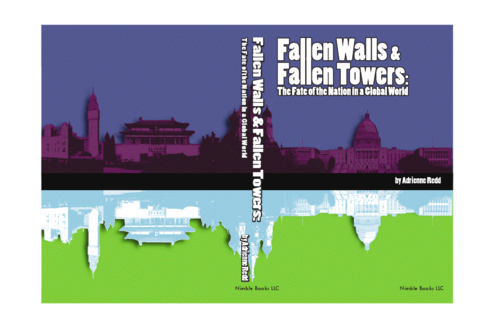
 by Adrienne Redd
 by John Lewis Gaddis, who detailed the extreme headaches satellite leaders caused Khrushchev and Brezhnev, or American troubles with the Shah, Somoza and Ngo Dinh Diem during the Cold War. Patrons who become dependent upon clients are hostage to their pawn’s incompetence and perverse defiance of political realities. In that myopia, patrons lose sight of their own real interests.

