zenpundit.com » insurgency

Archive for the ‘insurgency’ Category

Charles Cameron and the Strategist of Jihad

Friday, June 4th, 2010

My friend and guest-blogger Charles Cameron, a while back, posted a learned essay here at ZP and at Leah Farrall’s  All Things Counterterrorism, in response to the unusual dialogue that Farrall, a former Australian counterterrorism official, was having with  Abu Walid al-Masri, an Egyptian strategist of jihad, a sometime critic of al Qaida and an adviser to the Taliban. In other words, al-Masri is an influential voice on “the other side” of what COIN theorists like Mackinlay and Kilcullen call the “globalized insurgency”.

After some delay, al-Masri has responded to Charles, as Farrall describes:

Abu Walid al Masri responds to Charles Cameron

Abu Walid  has responded a letter from Charles Cameron. Abu Walid’s response  to Charles can be found here.  You’ll notice when following the link, that he has a new website.

It’s well worth a look. There is also an interesting comment from a reader below Abu Walid’s response to Charles; it’s from “one of the victims of Guantanamo”.

As you’ll see from his website Abu Walid is also engaging in a number of other interesting dialogues at the moment, which I am interested to read as they progress.

Charles wrote his letter in response to the dialogue Abu Walid and I had a little while back. For those of you new to the site, you can find this dialogue to the right in the page links section.  The letter from Charles can be found on my blog here.

….These letters may not change anything, but they are important because  in mass media sometimes only the most controversial and polarising views tend to make it into the news.

I think person to person contact, especially via mediums like this, can go some way to providing opportunities for all of us to discover or be reminded that there is more than one viewpoint and along with differences there are also similarities. Contact like this humanizes people, and in my book that’s never a bad thing.

Farrall is working up a translation of al-Masri’s post  from Arabic ( I used Google which gives a very rough translation). Readers who are fluent are encouraged to read it in full and offer their thoughts. Here is a snippet:
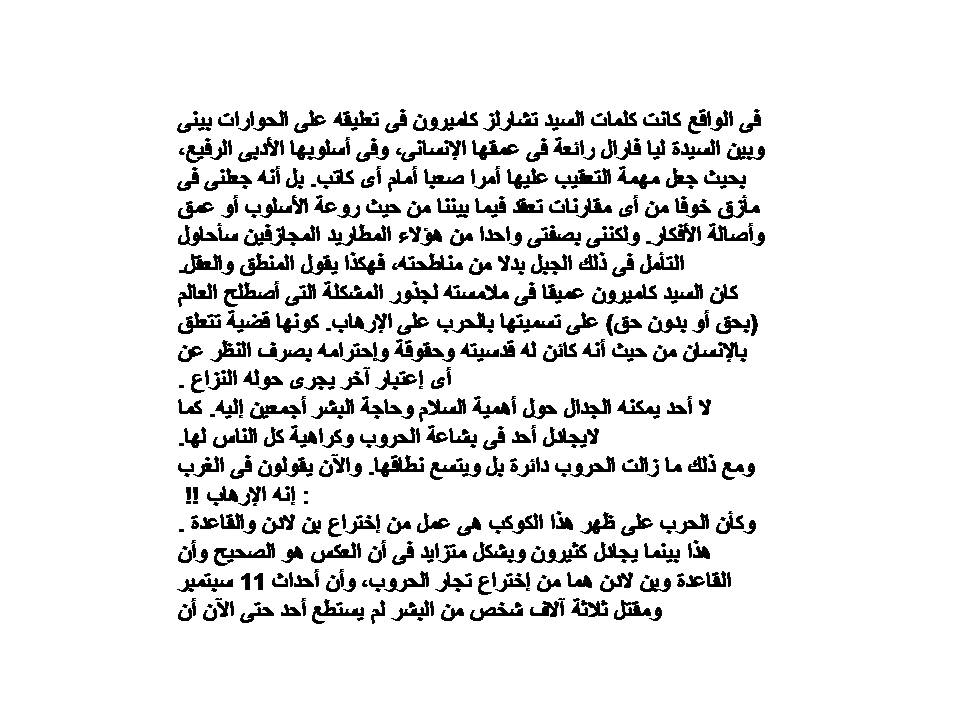
al-masri.jpg

Google translation is fast and dirty but it is not the best source of translation, it garbles many words and phrases that require transliteration, which is how I read al-Masri’s response. With that caveat, my impression was that he did not know quite where to go with Charles’ essay, beyond acknowledging it and then retreating to some talking points. The remarkable aspect was that al-Masri felt the need to respond at all which has sent Charles thoughts bouncing around the radical Islamist online community.

Nice work, Charles!

Book Review: WAR by Sebastian Junger

Thursday, June 3rd, 2010

WAR by Sebastian Junger

I just finished reading my courtesy review copy of WAR by journalist and author Sebastian Junger, on his firsthand observation of the war against the Taliban in the Korengal Valley, waged by the soldiers of the 2nd Platoon of Battle Company. I cannot say that I found WAR to be an enjoyable read – though Junger is a polished writer – a more accurate description is that WAR is powerful, thought-provoking, at times moving and, ultimately, a very disturbing account of the war in Afghanistan.

Junger, whose previous works include The Perfect Storm: A True Story of Men Against the Sea and Fire, was embedded along with photojournalist Tim Hetherington, with 2nd Platoon during their COIN campaign in Korengal, a mission that resulted in some of the bloodiest firefights and highest American casualties of the Afghan war and withdrawal from a rugged valley sometimes known as “Afghanistan’s Afghanistan”. The Korengalis, related to the people of Nuristan, are noted for their xenophobic hostility to outsiders, which was directed at times toward the Taliban as well as Americans. Junger reports that the US only succeeded in controling a quarter of Korengal and contesting roughly half of the six mile by six mile valley with the Taliban and local “accidental guerrillas”motivated by money, excitement, religious zeal or revenge to attack the Americans.

WAR is not an especially “political” or “policy” book discussing the war from some remove. Junger’s primary interest are the men of second platoon at Restrepo, an outpost dedicated to the memory of a valorous medic who had been killed. O’Byrne, Anderson, Stitcher (who has “INFIDEL” tattooed across his chest), Jones, Moreno, Bobby to name just a few soldiers Junger interviewed and witnessed how they lived in the moment. That moment could comprise the adrenaline high of combat, agonies of grief, anticipatory tension before the next ambush, the angst of boredome behind the wire and especially the iron bonds of brotherhood in a small unit tempered by fire.

What comes through in War, aside from the extremity of the terrain and the uncertainty of ever-present danger, men being shot without warning by the enemy, even in Restrepo, is how very few men are actually involved in combat. Battle Company is the vaunted “tip of the spear” but when only a few hundred men were taking a wildly disproportionate percentage of all combat contacts in a nation the size of Afghanistan ( Junger cites 20 %) the spear begins to look more like a tiny sewing needle connected to a Leviathan-like noncombatant-administrative tail, surreally outfitted with fast food courts.

There’s a peculairly granular quality to Junger’s WAR, the grittiness of the squalid conditions in which soldiers live, the depths of their physical sufferings and mental exhaustion, their primal fear of letting their comrades down in battle and being responsible for getting friends killed. There are also epiphanies of bravery and carrying the day against the odds, men living who but for chance would have died on some rock strewn hill and lusty celebration after the deaths of their enemies. The sort of politically incorrect, atavistic, jubilation that is culturally frowned upon by people who are comfortably safe and far away.

What disturbed me most about WAR was not just how few Americans are carrying the burden of the combat in Afghanistan but how disconnected these few soldiers and their sacrifices are from the rest of the military itself. Junger’s epilogue with O’Byrne, a fine soldier who is a major figure in the book, and his inability to readjust and shift from the battlefield to garrison or civilian life is deeply depressing. “The Army’s trying to kill me” O’Byrne declared, finding a momentary refuge in alcohol, but little help from the military bureaucracy.

Junger attempted to show the war in Korengal as seen from the perspective of the privates, NCO’s and junior officers of Battle Company who lived and died there, from his interviews and his own participation in their patrols as they came under fire or as they gingerly parleyed with Korengali elders in isolated villages. Eschewing theory or a historian’s search for causation, Junger attempts to let the soldiers words and actions drive the narrative.

Sebastian Junger’s WAR is raw and undecorated by sentiment.

Religions of the Chaos Lords

Saturday, May 29th, 2010

 Pamela L. Bunker and Dr. Robert J. Bunker at SWJ Blog

The Spiritual Significance of ¿Plata O Plomo?

Conventional wisdom holds that narco gang and drug cartel violence in Mexico is primarily secular in nature. This viewpoint has been recently challenged by the activities of the La Familia cartel and some Los Zetas, Gulfo, and other cartel adherents of the cult of Santa Muerte (Saint Death) by means of religious tenets of ‘divine justice’ and instances of tortured victims and ritual human sacrifice offered up to a dark deity, respectively. Severed heads thrown onto a disco floor in Michoacan in 2005 and burnt skull imprints in a clearing in a ranch in the Yucatán Peninsula in 2008 only serve to highlight the number of such incidents which have now taken place. Whereas the infamous ‘black cauldron’ incident in Matamoros in 1989, where American college student Mark Kilroy’s brain was found in a ritual nganga belonging to a local narco gang, was the rare exception, such spiritual-like activities have now become far more frequent.

These activities only serve to further elaborate concerns amongst scholars, including Sullivan, Elkus, Brands, Manwaring, and the authors, over societal warfare breaking out across the Americas. This warfare- manifesting itself in ‘criminal insurgencies’ derived from groups of gang, cartel, and mercenary networks- promotes new forms of state organization drawn from criminally based social and political norms and behaviors. These include a value system derived from illicit narcotics use, killing for sport and pleasure, human trafficking and slavery, dysfunctional perspectives on women and family life, and a habitual orientation to violence and total disregard for modern civil society and democratic freedoms. This harkens back to Peter’s thoughts concerning the emergence of a ‘new warrior class’ and, before that, van Creveld’s ‘non-trinitarian warfare’ projections.

Cultural evolution in action, accelerated by extreme violence.

A Pretty Big COIN

Friday, May 28th, 2010

This looks highly informative. Hat tip to Wings Over Iraq.

I regret the light posting and lack of attention to the superb comments. I am buried at work and will be until early next week. Will be posting short items until then

WAR

Monday, May 24th, 2010

WAR by Sebastian Junger

Received a courtesy review copy of WAR yesterday from the publisher, due entirely to the kind offices of Kanani.

Read the first 50 pages this afternoon and found it it interesting because as a book, it exists on the opposite end of the spectrum from Mackinlay and Kilcullen. Where the former are giving a panoramic or telescopic view of COIN as strategic-operational-grand tactics, the author of WAR, journalist Sebastian Junger, is using a microscope to show COIN in the Korengal valley, Afghanistan as seen by an Army platoon, squad and individual soldier. Maybe an electron microscope would be a better analogy. Gritty.

Will write a full review when I am finished. If any active duty or veteran readers were in Korengal or Afghanistan or have read WAR and care to sound off in the comment section, you are cordially encouraged to do so.

Junger is also part of the documentary film project, RESTREPO, which he personally financed.


Switch to our mobile site

