zenpundit.com » feedback

Archive for the ‘feedback’ Category

Guest Post: The Diplomacy of Caring

Tuesday, October 19th, 2010

Charles Cameron is the regular guest-blogger at Zenpundit, and has also posted at Small Wars Journal, All Things Counterterrorism, for the Chicago Boyz Afghanistan 2050 roundtable and elsewhere.  Charles read Theology at Christ Church, Oxford, under AE Harvey, and was at one time a Principal Researcher with Boston University’s Center for Millennial Studies and the Senior Analyst with the Arlington Institute:

The Diplomacy of Caring

by Charles Cameron

It’s such a simple thing, a blog post with space for comments. And yet it is also a remarkable opportunity.

The blog post I’m thinking of today was made about three weeks ago by an American helicopter pilot, CWO John Bockmann, who has been flying relief missions in Pakistan as part of the US response to the terrible floods there.

A retired Pakistani officer, Brig. FB Ali, read it on Pakistan’s Express Tribune blog, and quoted from it in a guest post on Col. Pat Lang’s blog, Sic Semper Tyrannis, today. Both are worth reading – but what’s most wonderful, as Brig Ali notes, is the outpouring of love and appreciation in the Comments section, both from individual Pakistanis and from Bockmann’s own family.

Bockmann writes:

I have learned in my time here that Pakistani people are truly gracious. Strangers have invited me for chai and conversation. Almost anyone will shake my hand and ask my name, inquire about my health and how I am getting along. Instead of a handshake at our first meeting, I have sometimes been embraced. “Strangers shake hands,” my new friend Mahmood explained, “but brothers hug each other.” This warms my heart. My mission, our mission, is straightforward, noble, and good. I am deeply grateful to those who support us here, for we need all the help we can get in order to help those in need. I am honored to do this work. I feel at home here beyond anything I could have expected.

and

When I do return home, I will bring with me hundreds of pictures, dozens of journal entries, six duffel bags, and several recipes for local dishes that I have enjoyed, but I will also bring innumerable memories that I will treasure for life — memories of Pakistan and its people. They have surprised me with friendship. I hope that through our work of compassion we may surprise them with friendship as well.

I will let the comments of Abdullah and Mustafa stand for the many that were posted by Pakistanis in response:

God bless you and may you return home safe and sound . There is a lot in common and a lot to share between common people not only living in U.S and Pakistan but also between people living all over the world. — Abdullah

and:

John, I’d like to personally thank you for your efforts and for giving your time for this cause. May Allah reward you and bless your family. — Mustafa

Others wrote longer and more effusive comments, but in their simplicity those two capture the spirit of the whole.

And then John’s mother, deeply moved by the love shown her son by these people from a far-off country, wrote her own comment — which strikes closer to the heart than the best of diplomats easily can:

Thus shall it be between Christians and Muslims, your country and mine: despite the heartbreaking fractures, we shall become strong in all the weak places, and no government policies, no misguided violent people shall prevent it, because God wills it, whether we call him Allah or Jehovah, and we will it, with all our hearts. We shall support each other while respecting our differences.

I’m with FB Ali on this, and Pat Lang, and John Bockmann and his family, and all the many Pakistanis who responded. More recently, John Bockmann wrote this comment on the whole exchange:

Amazing. I know the hearts of many Pakistanis now, but I am still surprised by their outpouring of warmth — especially in such hard times. I read all of the comments — the stories, the blessings, the frustrations — and I am increasingly convinced that international relations are effected more by common people like you and me than by politicians who may never get a chance to have tea and real conversation with “the other side”. I am so privileged to be so well loved while I am so far from home. God’s blessings on Pakistan and her people.

If you want to see Bockmann, Cpl. Jenie Fisher interviewed him earlier in the mission, and you can find those videos here. I hope she does a follow-up. I hope the press picks up on this. This is what’s best in our common humanity — hearts and minds – they’re not won, they open. And this is what’s best about the internet — this possibility. I’ll close with the words of Engineer Syed, who writes:

Ten people like the pilot who is in the picture in worlds each decision making cabinet-agency-organization etc can change the total scenario of the world

Visualizing Strategy

Saturday, September 25th, 2010

warstrategy2.jpg

Is it right? Horribly wrong? Missing variables?

Fire away in comments.

ADDENDUM:

Joseph Fouche offers up his graph of schools of strategy at The Committee of Public Safety. Note that unlike me, he has placed them in terms of “Influence…..Coercion…Violence”:

Dr. Chet Richards, in his turn, kindly drew my attention back to graph he created -if memory serves – around the time he wrote Neither Shall the Sword, but I am still trying to figure out how to convert the file to something I can post here. Until I do, go to slide 89 in the link below:
4GW and Grand Strategy

Summer Series 2010: Reviewing the Books!

Saturday, September 4th, 2010

Every year I make an effort to increase my reading of books during the summer months. Inevitably, I fail at completing whatever overambitious reading list that I compose while somehow finding time to read other books that were never on the list. This year was no exception.

Starting this weekend, I am going to be reviewing all the books I did read from late May to early September. It was an eclectic collection and I hope to complete this series of posts by mid-September. A few reviews that have already appeared in this time period will be re-posted to make the series complete.

Readers are free to offer comments and recommendations about their own favorite summer books or their idiosyncratic reading habits as the series rolls along……

The Mob of Virtue

Sunday, August 1st, 2010


Small “r” republican virtue, to be precise.

A wise man once told me that a weakness of our Constitutional system was that the Framers implicitly presumed that people of a truly dangerous character, from bullies to bandits to political menaces to the community, would primarily be dealt with in age-old fashion by outraged neighbors whose rights had been trespassed and persons abused one time too many. They did not prepare for a time when communities would be prohibited from doing so by a government that also, as a whole, had slipped the leash. Indeed, having read LockeMontesquieuCicero, Polybius, Aristotle and Plato, they expected that such a state of affairs was “corruption” of the sort that plagued the Old World and might happen here in time. A sign of cultural decadence and political decay. They gave Americans, in the words of Benjamin Franklin, “A republic, if you can keep it”. It remains so only with our vigilance.

It is happening now.

We have forgotten – or rather, deliberately been taught and encouraged to forget – the meaning of citizenship.

We have let things slip.

Joseph Fouche superbly captures this implicit element, the consequences of the loss of fear of  informal but very real community sanction, in his most recent post:

People Like Us Give Mobs a Bad Name

….A classic American mob could exhibit any or all of these strategies. It could be a saint inciting a mob to attack others who deviated from a shared narrative. It could be a knave in saint’s clothing inciting an attack on personal rivals. It could be a moralist inciting a mob against the local knaves. The one constant is that an American mob was an expression of communal self-government by moralists seeking to punish what they saw as deviant, even if its manifestation was frequently unpleasant. It was a sign the local people were engaged.

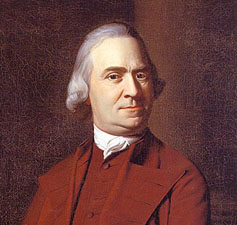
Samuel Adams was the Lenin of the American Revolution. He conceived a hatred for the British Empire and a desire for American independence well before anyone else did. Adams skillfully used mobs alongside legal pretense to incrementally spread his agenda. Others followed his example. In the Worcester Revolution of 1774, the local population shut down the normal operations of royal government in west and central Massachusetts and drove royal officials out of those regions (the book to read is Ray Raphael’s The First American Revolution: Before Lexington and Concord). The British crown lost control of inland Massachusetts before Lexington and Concord were even fought.

However, eleven years later, when many of the same local residents attempted to do the same thing in protest of the policies of a now independent Massachusetts, the state government put down their rebellion with Samuel Adams’s strong support. The difference? An apocryphal remark attributed to Adams captures some of the truth behind his attitude: “the man who dares to rebel against the laws of a republic ought to suffer death”. Mobs protesting the actions of an unrepresentative government like the British Parliament, Adams argued, were valid. Mobs protesting the actions of a representative government like Massachusetts’s state government, on the other hand, were treasonous. This doctrine, supported by other Revolutionary leaders, especially the cabal behind the Order of the Cincinnati, was eventually enshrined as the higher law of the land in the slow motion coup d’etat that overthrew the Articles of Confederation and replaced it with the more authoritarian United States Constitution in 1787-1788.

While mobs continued to combine, they were gradually neutered by the conscious agenda of American elites who sought to replace informal norms enforced by communal censure with formal norms applied under the professional supervision of “wiser heads”. This was a collusion between saints and knaves against moralists. Saints got purer standards that were not reliant on the whims of moralists who got stirred up in unpredictable ways that might violate the saints’ prevailing narrative while knaves got credentials that allowed them to entrench their positions and agendas under the cover of serving a higher good. The same sense of community morality and punishment that gave nineteenth century self-government its vigor and occasional excess was weakened as moralists were tuned out by saints embedded in holy isolation and knaves concerned only with advancing personal priorities. Moralists saw the knaves getting away with free riding off of them and began to opt out, leaving room for more knaves to free ride. For a little formal pretense, the returns on rent seeking were enormous.

The ideal went from a citizenry engaged in self-government to a system designed to advance the best and brightest. Meritocracy sounds good in theory and has some positives in reality. However, a perfect meritocracy is a perfect tyranny. All of the leaders are on once side and all the followers are on the other. This tendency toward the separation of the best from the rest may only be checked by the tendency of those on the ascendant to favor their own children, whatever their merit, over strangers that are more meritorious. This will force some aspiring meritocrats to side with the followers and bring about a rotation of elites. But the transition may take a while and its best to start before you have a meritocratic problem….

Read the whole post here.

Today’s circumstances, with the elite determinedly crafting rules for the mass but not for their class, have an ominous portent for the future of America as a democratic republic, but violence is not yet required.

Political engagement is.

Cameron on “A Translation of Abu Walid al-Masri’s Reply”

Thursday, June 17th, 2010

Charles Cameron, my regular guest blogger, is the former Senior Analyst with The Arlington Institute and Principal Researcher with the Center for Millennial Studies at Boston University. He specializes in forensic theology, with a deep interest in millennial, eschatological and apocalyptic religious sects of all stripes.

Zen here – some background prior to Cameron’s guest post. As I mentioned previously, Charles, a while back, posted a deeply reflective essay here at ZP and at Leah Farrall’s  All Things Counterterrorism, in response to the unusual dialogue that Farrall, a former Australian counterterrorism official, was having with  Abu Walid al-Masri, an Egyptian strategist of jihad, a sometime critic of al Qaida and an adviser to the Taliban. In other words, al-Masri is an influential voice on “the other side” of what COIN theorists like Mackinlay and Kilcullen call the “globalized insurgency” and a theorist of insurgency himself. After some delay, al-Masri responded to Charles, as Farrall described:

Abu Walid al Masri responds to Charles Cameron

Abu Walid  has responded a letter from Charles Cameron. Abu Walid’s response  to Charles can be found here.  You’ll notice when following the link, that he has a new website.It’s well worth a look. There is also an interesting comment from a reader below Abu Walid’s response to Charles; it’s from “one of the victims of Guantanamo”.

As you’ll see from his website Abu Walid is also engaging in a number of other interesting dialogues at the moment, which I am interested to read as they progress.Charles wrote his letter in response to the dialogue Abu Walid and I had a little while back. For those of you new to the site, you can find this dialogue to the right in the page links section.  The letter from Charles can be found on my blog here.

….These letters may not change anything, but they are important because  in mass media sometimes only the most controversial and polarising views tend to make it into the news.I think person to person contact, especially via mediums like this, can go some way to providing opportunities for all of us to discover or be reminded that there is more than one viewpoint and along with differences there are also similarities. Contact like this humanizes people, and in my book that’s never a bad thing.

With that context in mind, we will now let Charles take it away:

A TRANSLATION of ABU WALID al-MASRI’S REPLY

by Charles Cameron

I asked a native-speaking grad student associate of mine to give me a literal translation of Abu Walid’s response to my post, and then tweaked it to give it a reasonable combination of accuracy and fluency, and my associate has kindly given the result his thumbs up — so what follows is probably fairly close to the sense of Abu Walid’s original.

Is this a return to the Age of Chivalry? — Comments on the Response of Charles Cameron

May 31, 2010

Author: Mustafa Hamed, Abu al-Walid al-Masri

MAFA: The Literature of the Outlaws

Charles Cameron’s words, in his comment on the dialog between myself and Ms. Leah Farrall, were wonderful, both for their humanitarian depth and in their high literary style, which makes it difficult for any writer to follow him. He puts me in something of a dilemma, fearing any comparison that might be made between us in terms of beauty of style or depth and originality of ideas — but in my capacity as one of those adventurous “outlaws”, I will try to contemplate, rather than compete with, his response, since this is what logic and reason call for.

Charles Cameron was deeply in touch with the roots of the problem that the world has (justly or unjustly) called the war on terror: it is a cause that relates to the sanctity of the human individual, and his rights and respect, regardless of any other considerations around which the struggle may revolve.

No one can argue about the importance of peace, or the need all humans have for it, nor can anyone argue that war is not hideous, and universally hated.  And yet wars are still happening, and their scope is even increasing.

And now the West claims: it is terrorism — as if war on the face of the earth were the invention of Bin Laden and al-Qaida — and all this, while many others are arguing ever more forcefully that the opposite is true, that al-Qaida and Bin Laden are the invention of war merchants, and that no one can definitely declare as yet — in an unbiased and transparent way — who caused the events of September 11 and the deaths of three thousand persons.

It is not only the one who pulls the trigger who is the killer, as we know —  the one who set the stage for a crime to be committed, who arranges the theatre, and opens the doors, and lures or hires the one who pulls the trigger is even more responsible. He’s the one, after all, who carries away the spoils of the crime, then chases down the trigger-man and finishes him off — not for the sake of justice, nor for love of humanity, but to hide the evidence of the crime, to erase his own fingerprints, and assassinate the witnesses who could implicate him.

For example: was the execution of Saddam Hussein really about bringing justice? Of course not. They executed him after a travesty of a trial for the most trivial of his crimes. Nobody, however, asked him about his most significant crimes — they killed him before he could admit to them, or name the major partners who brought him to the apex of his power, and provided him with a full range of lethal weaponry including weapons of mass destruction, so he could perform mass murder with confidence in his own impunity.

I personally (and here I speak only for myself, so Ms. Farrall need not get irritated) would have preferred to have Charles Cameron as President of the US and a united Europe and the leader of NATO — then there would have been no wars in Afghanistan or Iraq, and the problem of terrorism would have ended in minutes, along with the problems in the Middle East, and nuclear militarization, and even those of poverty and pollution. Why? Because not a single one of these problems can be solved except through the logic of humanitarianism, of justice, and love for people and peace, and hatred of oppression and discrimination between people in any form — we are all the creatures of God, and to Him we shall all return.

I am reminded of Richard the Lionheart, who came to lead a big crusade to capture Jerusalem from Muslim hands. The bloody wars he led brought fatigue to everyone and benefited neither the religious or nor the day-to-day interests of either party. Leading the Muslim campaign was Sultan Salah al-Din al-Ayyubi (Saladin), King Richard’s peer in courage, chivalry and wisdom.

Both parties finally agreed that Jerusalem should remain in Muslim hands — hands which would guarantee its security and that of its people, and of both the Islamic and Christian sanctuaries, preserving their interests and protecting the sanctuaries of all, in peace.

Thereafter, King Richard retreated from Muslim lands, carrying with him a most favorable impression of the Muslims and of Saladin as he returned to his own country, while leaving a continuing memory of respect and appreciation for himself and his chivalry with Saladin and the Muslims — which is preserved in our history books down to the present day.

It was Mr. Cameron’s spirit of fairness, chivalry and true spirituality that reminded me of King Richard’s character — but sadly, it is very difficult to find a ruler in the west like King Richard, and I find it even more regrettable that Muslims should have even greater difficulty finding among themselves a ruler like Saladin.

This is because things are on the wrong track, and people are not in their rightful positions. The wrong people are in power and leading us, while the best among us are weak and under siege.

No human likes or wants this state of affairs — but are the people who are in control of this planet real human beings? Can we consider those who own 50% of the earth’s wealth human, even though they comprise no more than 2% of the human population?

In my opinion, the situation is much worse than these international statistics suggest. I believe the number of those who rule the world is far fewer, and that they own much more. They are the ones who invest in all kinds of wars wherever, and under whatever name or banner, they may be found. The mention of war translates to these people as an immediate waterfall of gold tumbling into their usurious bank vaults, which hold the world — both leaders and led — by the neck.

I speak here of all wars without exception, whether they be the First and Second World Wars, or the wars in Korea and Vietnam, or the First and Second Gulf Wars, or the Third and Fourth, yet to come — whether it be a war in Afghanistan (to hunt for the “Bin Laden and al-Qaida” mirage) or in Iraq (looking for illusory “weapons of mass destruction”) or in Bosnia, Somalia or Africa — that continent of eternal wars for the sake of gold or oil fields — Africa, that colonized continent of disease, covertly modernized in the labs of the secret services and giant pharmaceutical companies.

I wish we could return to the age of chivalry– of courageous and rightly religious knights — for then wisdom would prevail and peace would spread, and we could leave this age of the brokers and merchants of war behind us.

Muslims always call on God to bless them with a leader such as Saladin , and I think they should also pray for God to bless the West with a ruler such as Richard the Lionheart — because without a Saladin here and a Richard there, the fires of war will continue to blaze. That’s the reason the brokers of wars will not allow the appearance of a Saladdin here, nor a Richard there.

By means of the laws to fight terrorism, the emergency laws, NATO, the Security Council and the International Court of Justice, the various counter-terrorism forces around the world, the CIA and FBI, and the Army and National Guard, the Patriot Act in the US, the jails at Guantanamo and Abu Ghraib and Bagram — and the secret “black sites” and “floating prison ships”– by all these means and many others, they kill and jail and start wars, so that humans (and terrorists) are not threatened by the likes of the two great kings, Saladin and Richard.

Therefore in the situation we find ourselves in now — despite our noble dreams of an age of knighthood and chivalry as an alternative to this age of broker kings — the destiny of all humanity, and even planet earth itself, remains in question. Of course there will be an end to all this someday… but how??… and when?? I do not think any one of us has the answer.

Finally I would like to thank Charles Cameron for his care in writing and commenting, and to express again my thanks to Ms. Leah Farrall, who deserves all the credit for initiating these dialogues.

Signed: Mustafa Hamed, Abu al-Walid al-Masri


Switch to our mobile site